Returning to Fort Benjamin Harrison
I was still a master sergeant when I arrived at Fort Benjamin Harrison, Indiana. The post carried a family echo for me because my grandfather had served there during World War I. I also understood that part of its history included service as an Army airfield.
I first experienced the post in 1968. We reached it then by state and country roads, before Interstate 465 completed its massive loop around Indianapolis.
The Army had customs I came to appreciate quickly. One was placing a parenthetical (P) after the rank of someone selected for promotion. It helped our place in the base housing order, and we ended up in one of the stately brick duplexes on Senior NCO Row.
Finding My Place in the Radio Section
I arrived without any preconceived notion of exactly where I would serve. The chief of the Broadcast Department was Lt. Col John Gura, who had established himself as one of the Air Force’s most savvy PAOs with broadcasting experience. I had inadvertently upset Col. Gura 18 months earlier. In a Broadcast Manager’s Course exercise, I failed an assignment to evaluate an AFRTS audience survey and make radio and TV programming changes. I had used my Air Force Short Course “lessons learned” to criticize the survey methodology, rather than make programming changes. It had been a survey Col. Gura had written while serving in Guam. Fortunately, Col. Gura, with his characteristic sense of humor, overlooked that faux pas. In one of his final DINFOS acts, he would upstage the annual DINFOS Christmas party with his professionally produced video.
The immediate need was in radio instruction. I quickly adapted to the leadership of Tim Paige, the Department of the Army civilian who headed the Radio Section. Tim was a fair and seasoned supervisor, an expert in radio operations who was also trained in instructional systems development. He became both a friend and a confidant. The section itself was a team of experienced people who knew the craft, had proven their skills, and were in the midst of their careers. We were all destined to return to our services and “the field,” where we would have to live with the products of our training.
Learning Another Military Language
One of my earliest tasks was taking a crash course in Army and TRADOC language. The acronyms were different, the staff procedures had their own logic, and the Army way of moving paper or changing a training regimen could be a world apart from the Air Force system I knew. I was not entirely new to Army culture. I had worked beside soldiers in Taiwan and NORAD and supervised Army broadcasters at Incirlik. That experience did not make me fluent in Army staff work, but it kept me from being surprised by service turf or personnel systems.
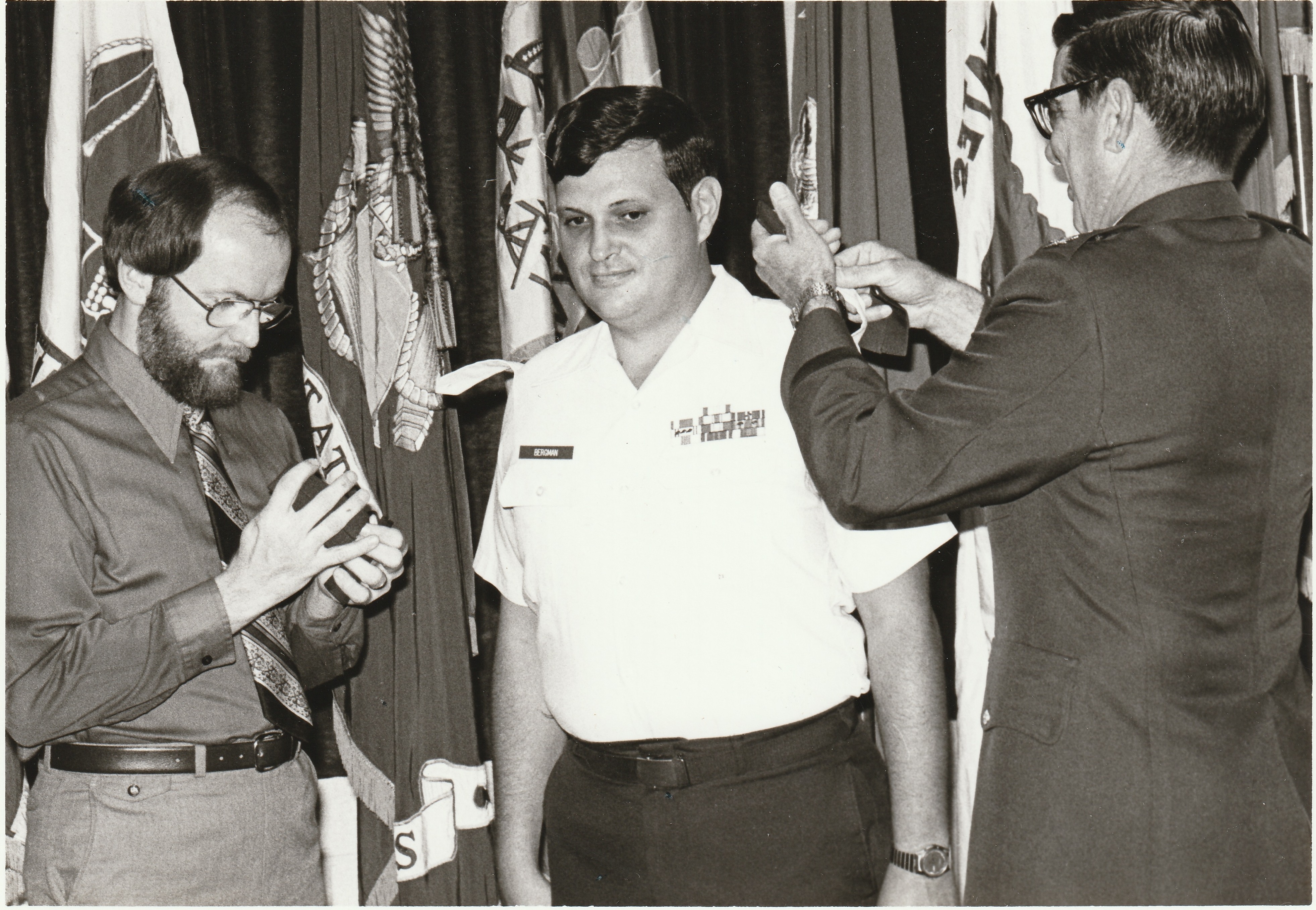
After putting on senior master sergeant stripes with only 14 years of service, I was able to pick the brains of Army and Marine Corps senior NCOs and Navy chief petty officers. My previous experience in a Navy detachment proved beneficial and helped establish rapport with the new department leadership: Commander Matt Dillon and Master Chief John Todd. I would come away from the assignment convinced that no enlisted rank carried quite the same mixture of tradition and authority as a Navy chief. It was a special honor to be invited to their CPO Mess. As my tour progressed, I was proud that all four Navy members on our radio staff earned their chief's insignia during their tours at DINFOS.
From Voice Training to the Studio
Most of our students came to DINFOS directly from basic training. My recollection is that the figure was close to 95 percent. Before they reached radio instruction, they spent about three weeks in intensive voice and diction work and in common subjects such as broadcast writing, with Mr. Dick Cassin and Air Force TSgt Tony Uminski serving as the best instructors one could ever hope for. There were also service-unique public affairs lessons. Broadcasting and print journalism shared some ground, but the walls between the two departments were still quite visible.
The radio portion was only about three weeks. Platform instruction came first. Then the students put their hands on the console, tape decks, cartridge machines, and the large vinyl collection in the record library. We were initiating them into a studio environment that could be both exciting and unforgiving. They had to learn the technology, develop motor skills and broadcast techniques, and exercise split-second judgment at the same time.
Radio still had primacy. It was the preferred—and often the only—method of informing and entertaining military members overseas and their families. It was a public affairs tool and a potential lifesaver in emergencies.
Broadcasting as Performance and Discipline
When it came right down to it, broadcasting was a performance art built on good writing and preparation. A radio disc jockey needed personality, and personality was difficult to install in a quiet young service member—or to suppress in someone with an oversized ego. I had grown up listening to Dick Biondi and Larry Lujack, star rock deejays at WLS in Chicago. MTV was just beginning its ascent on cable television. The first “shock jocks”—Bob and Tom—made their debut on nearby WFBQ. Most of our students had never been in a radio studio but had seen Wolfman Jack in the movie, American Graffiti. Yes, he was a broadcaster. But with his voice, he could never have passed the DINFOS voice audition.
Above all, we had to convince would-be broadcasters that military broadcasting still required them to be soldiers, sailors, airmen, or Marines first and broadcasters second. We were no better and no worse than the people we served. Some personality belonged on the air, but rules and regulations still applied. You lived by the clock, and the clock never stopped. Mistakes could not be taken back. In my experience, the audience could spot a “phony” almost instantly.
Teaching News
My favorite platform lessons dealt with news, which I considered my specialty. At the time I used CBS News, both radio and television, as a standard of quality broadcast journalism. I pointed out that many respected broadcast journalists had learned the discipline of print before moving behind a microphone or in front of a camera. Good broadcasting began with good reporting and writing.
That became clear when I evaluated student performances. The Navy students often seemed to have an advantage because they went through print journalism before broadcasting. The information specialty code had also been a prerequisite for Air Force broadcasters when I cross-trained years earlier, although it was often waived. The lesson for me was not that one service produced better broadcasters. It was that writing preparation showed up immediately when the clock started and the microphone went live.
Changing the Radio Course
Over time we made several revisions to the radio portion of the course. We expanded the disc jockey program to two hours and required students to learn different formats. We introduced a ten-minute expanded newscast. We required radio actualities—recorded voices or sounds used inside a news story. Recognizing the advance of satellite and network communications that would carry national and international news, we began turning the focus toward producing local news and information.
At times, listening to and grading the students' radio performances could be stressful, with jolting 1,000 Hz feedback occasionally frying our eardrums. Listening to Debby Boone's “You Light Up My Life” several times a day would be enough to make a sane person—well, you get the story.
In the process, I listened to some great radio, and some “not-so-great.” The music, at least, had been good. The 1980s featured some of the most prodigious hits by my favorite groups: Journey, the Moody Blues, Foreigner and Fleetwood Mac, to name a few. My hearing never fully recovered, and the resulting hearing loss was later recognized by the VA.
Attrition, Aptitude, and Responsibility
Attrition was high, and not everyone was suited to military broadcasting or a public affairs billet. My performance reports later credited me with changes that reduced attrition, but no set of numbers could erase the judgment instructors had to make about those seeking to enter our profession. The purpose was not to pass everyone. It was to give capable students a fair chance to develop and to determine honestly who could handle the work.
Some students arrived with college broadcasting experience and told us that the performance-based training at DINFOS gave them more useful microphone and studio time than they had received in college, where graduate students had garnered most of the airtime.
The gritty, day-to-day work belonged to the instructors who got the mission done. They demonstrated techniques, listened to performance after performance, corrected the same error as many times as necessary, and often devoted extra hours to guiding marginal students to success. I put special emphasis on my Air Force students, without showing favoritism.
Every Marine broadcaster also underwent further scrutiny: Gunnery Sergeant Dick Bugda. He was a Marine's Marine. If the Marines were “the few and the proud,” then broadcasting and public affairs Marines must be elite.
Nine Weeks at Gunter
My DINFOS tour was interrupted in 1984 by nine weeks at the United States Air Force Senior NCO Academy at Gunter Air Force Station, Alabama. It was the first and only professional military education course I attended in residence.
A few instructors at the academy suggested I consider joining the faculty after DINFOS. They also gave me a candid warning: with so many highly qualified senior NCOs competing there, a faculty assignment might not improve my chances for promotion to chief master sergeant. I was also not that impressed with Montgomery, Alabama. That advice stayed with me. As the end of my DINFOS tour approached, I was prepared for any assignment the Air Force had in mind.
The Call in March 1985
The uncertainty about my next assignment ended with a telephone call in March 1985. As I remember it, Chief Master Sgt. Mike Kitchen opened with a direct question: “How would you like to make chief?” The answer was obvious. The call was not a promise of promotion; it was an invitation to step into a much larger broadcasting organization.
Mike had also begun his career as a print journalist and had served in Southeast Asia. He had submitted his retirement papers and had looked at people eligible to move.
The tour at DINFOS had been rewarding. It was time to see the results of our training. The move offered several things at once: the hope of promotion, another accompanied assignment in the United States, and the warm climate of San Antonio. We put my native Hoosier State in the rearview mirror and set out on the next adventure. I was leaving the schoolhouse, but by then I was entrenched as a broadcaster.
FROM THE DINFOS YEARS
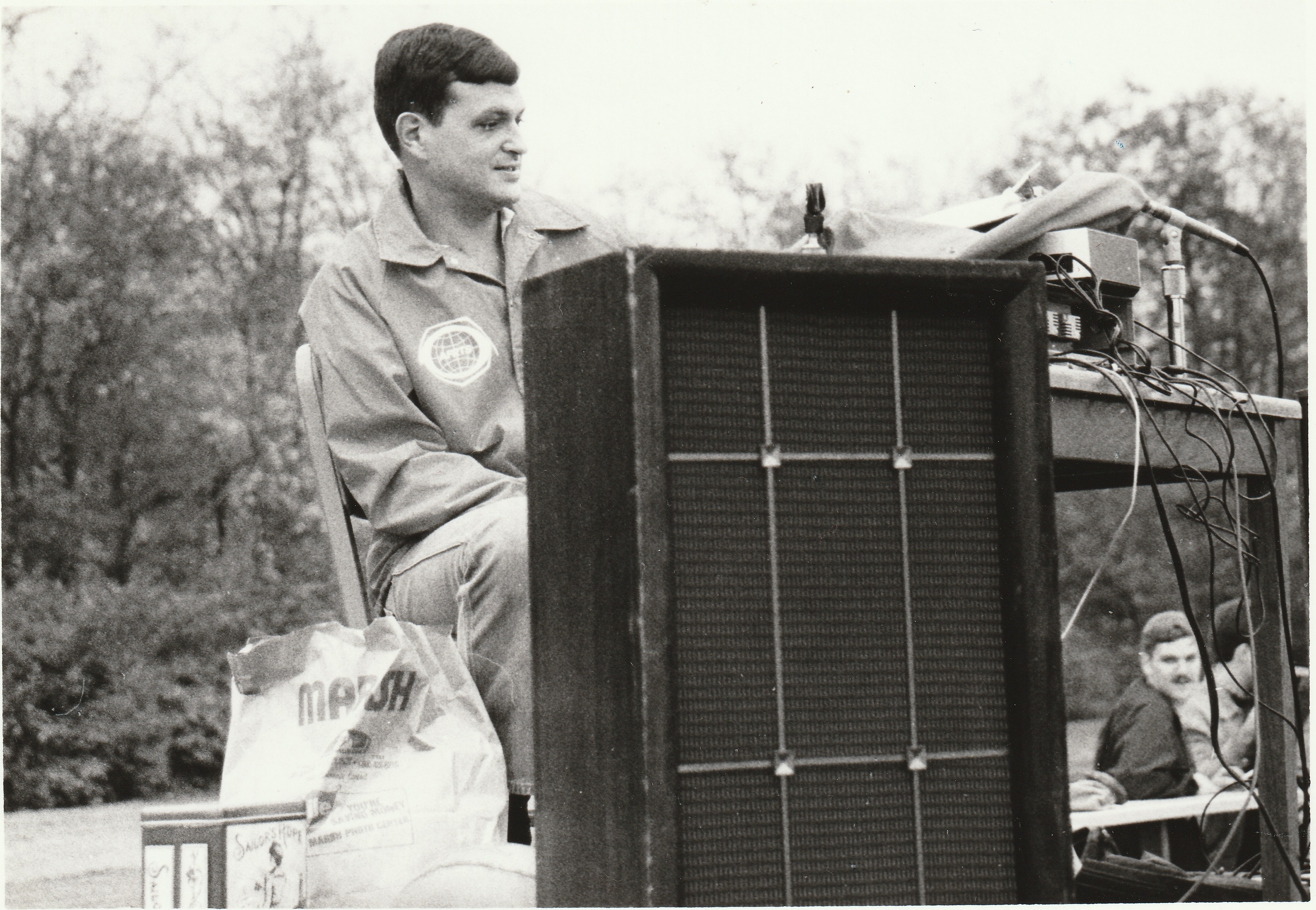
Senior NCO Status — On and Off Duty
Tap either photograph to examine it at full size.