The Rotator
I arrived at Sondrestrom Air Base in early January 1977 aboard the C-141 rotator from McGuire Air Force Base. A welcoming committee met each incoming flight, a base tradition that mattered in a place so remote. After three years inside a Navy-run broadcasting network in Taiwan, it felt good to be back on an Air Force base, even if this assignment was unlike any I had known.
The base was still carrying the emotional scars of the C-141 crash on Aug. 28, 1976. Twenty-three people had died. The loss reached across the American, Danish, and Greenlandic communities, and it remained part of the atmosphere when I arrived only a few months later.
An Arctic Lifeline
Sondrestrom was one of the remaining Aerospace Defense Command bases, with the practical job of supporting the Distant Early Warning Line sites scattered across Greenland. The airfield was a lifeline between the coast, the ice cap, and the world beyond the Arctic.
The New York Air National Guard's 109th Tactical Airlift Group, based in Schenectady, flew the Air Force's ski-equipped LC-130s, aircraft that could land on the ice cap and resupply the DYE stations. I flew with them out of Sondy when I left Greenland for my mid-tour leave. Heavier cargo arrived on occasional C-5A flights. During the summer, the port opened from about June through early September and brought another route for supplies.
There was a civilian side to the base as well, including the SAS Hotel. A Scandinavian Airlines flight came from Copenhagen each week - on Wednesday, as I remember it. For military and civilian travelers moving between Europe and North America, Sondrestrom could be both a destination and a waypoint.
A Small Air Force Community
The active-duty Air Force presence was small. I remember about a hundred Air Force people, roughly eighty-seven enlisted members and a dozen or so officers. We were greatly outnumbered by the civilian employees of Danish Arctic Contractors, whose work kept the base operating and included critical services such as firefighting.
Our Armed Forces Radio and Television Service station had a staff of ten. I believe that made us one of the largest active-duty units on the base, along with the security police activity.
Station Manager
As the ranking noncommissioned officer, I was placed in the station manager's position within a week of my arrival. It was one thing to study leadership through professional military education correspondence courses and to observe good supervisors in earlier assignments. It was another to become responsible for the entire operation almost overnight.
The job included scheduling, supplies, programming, personnel, and our relationships outside the station. I worked with public affairs leadership from 1st Lt. Virginia Prybyla and with the base commander, Col. Luther Milsap.
It was never lost on me that our primary purpose was not simply to entertain the troops with radio and television programming. We were there to keep them informed. That understanding also led me to help the one-person PAO shop. I volunteered to edit the base newspaper, I think it had a monthly schedule, and enlisted broadcaster sergeants Rick Shaw and Russ Young as staff writers. We may have been the only AFRTS staff to simultaneously broadcast and produce a base newspaper. Broadcasting and public affairs were never far apart in my career.
And Lieutenant Prybyla was freed up for other duties, destined for far greater responsibilities than a remote Internal Information function.
Visitors and an Unexpected Opening
Sondrestrom's location brought occasional visitors whose names seemed out of proportion to the size of the base. A few months before my arrival, Brigitte Bardot had passed through on her way to Canada to protest the annual seal hunt. During my tour, Prince Philip flew in and dined that evening with Air Force officers and the Danish liaison officer.
The visitor who had the greatest effect on my own future was Doug Blackwood from the Aerospace Defense Command public affairs office. He came to inspect our operation. The broadcasters at Sondrestrom and upcountry at Thule were among the last Air Force broadcasters not assigned to a broadcasting squadron or detachment under the Air Force Service Information and News Center at Kelly Air Force Base, Texas.
Blackwood was impressed with what he saw. He mentioned that the broadcaster at Headquarters Aerospace Defense Command and NORAD had been tapped for a remote tour in Alaska, and asked whether I might be interested in the position when my Greenland tour ended. The chance to move into a stabilized assignment in Colorado was easy to recognize. I said yes without hesitation.
Miami of the North
The year was uneventful only in the conventional sense. Isolation drew people together and created what I remember as a M*A*S*H-like atmosphere. We worked hard, but we also found ways to keep ourselves and one another amused.
When Col. Milsap's replacement, Col. Buford, arrived later that year, we decided that Carroll was not a sufficiently commanding first name for a base commander, so we renamed him “Max.” Black Ridge was the dominant outcrop overlooking the base and surrounding country. We renamed it Buford's Bluff. Col. Buford was a good sport and went along with most of our shenanigans.
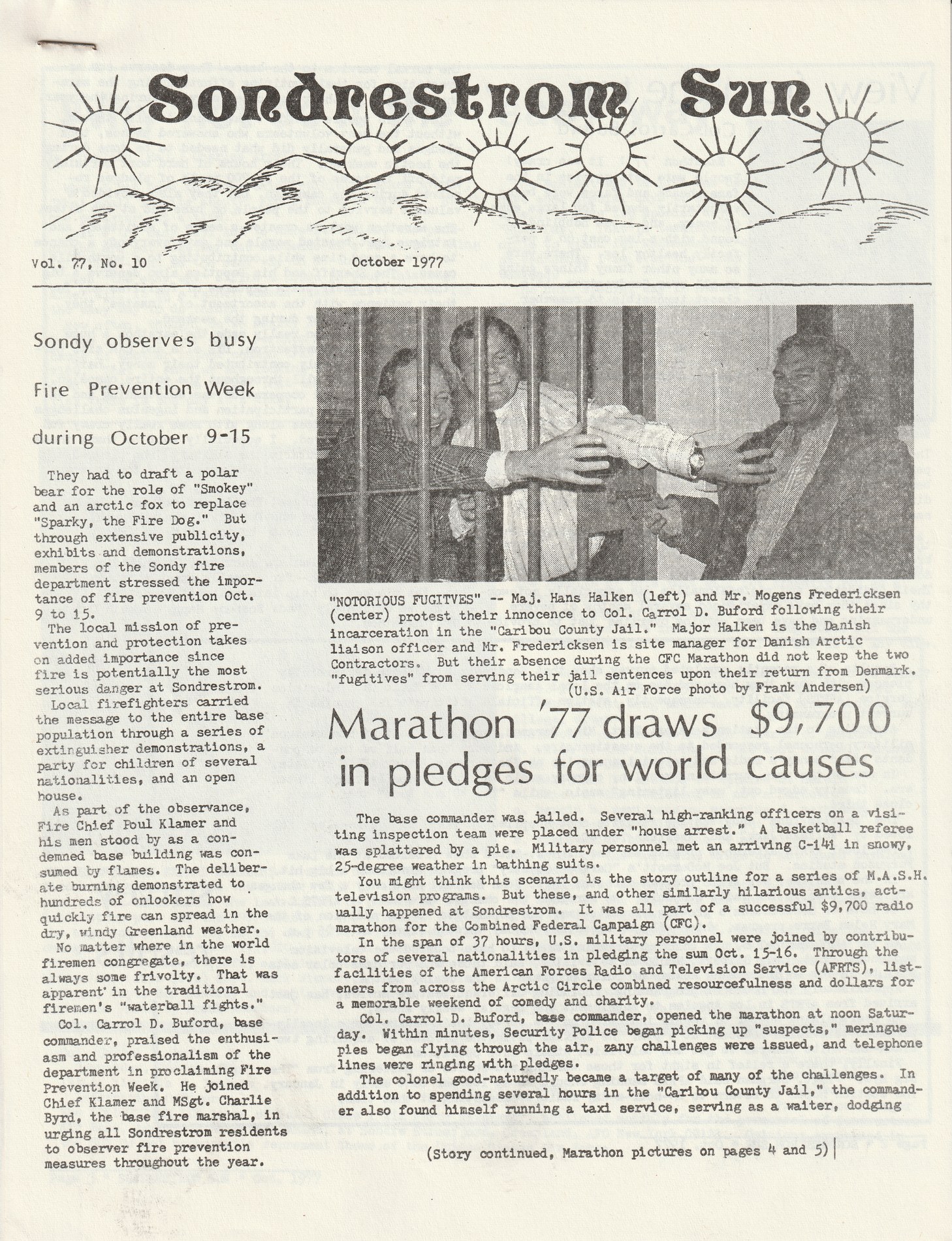
Marathon ’77
The Sondrestrom Sun recorded a community that converted Arctic isolation into comedy, competition and support for the Combined Federal Campaign.
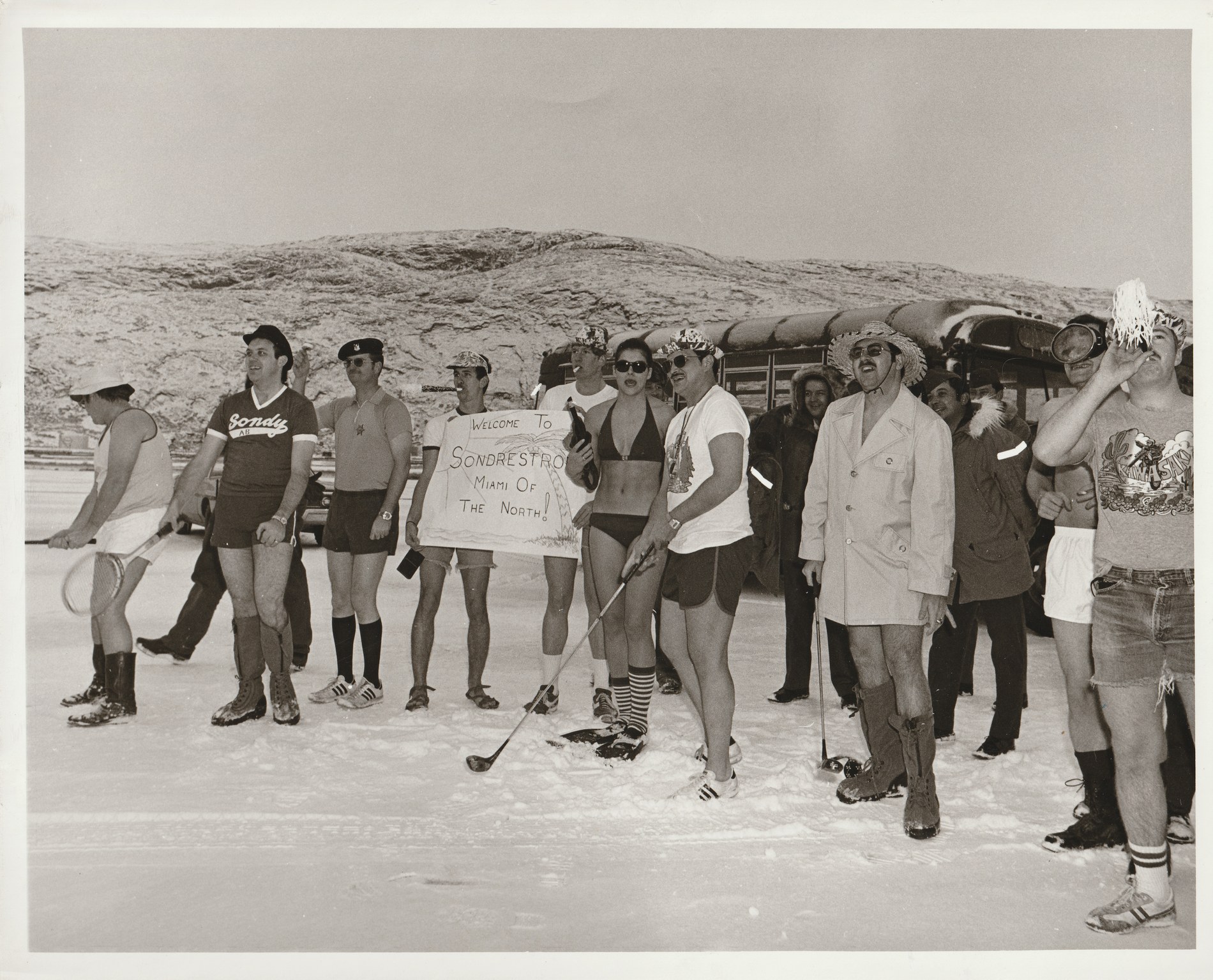
As part of the charity marathon for the Combined Federal Campaign, several officers and NCOs honored a pledge challenge and met the next C-141 “rotator”. They shall remain unidentified in this caption.
The Return of the Sun
The Arctic itself supplied the drama. During the long winter darkness, the northern lights - the aurora borealis - seemed to dance overhead. I remember temperatures falling as low as 66 degrees below zero. In that environment, the return of the sun was not a small event.
Sometime in February or March, the first rays appeared over the nearby ridges and mountains. The base treated sunrise as cause for a party. After so much darkness, a line of light on the horizon could change the mood of an entire community.
With the daylight came not an onslaught, but a trickle of European tourists who wanted to explore the countryside and hike toward the ice cap, about twelve miles away as I remember it. Melting ice created torrents of water that flowed into the fjord. The port came alive, and the Air National Guard's LC-130 missions moved at a quicker pace.
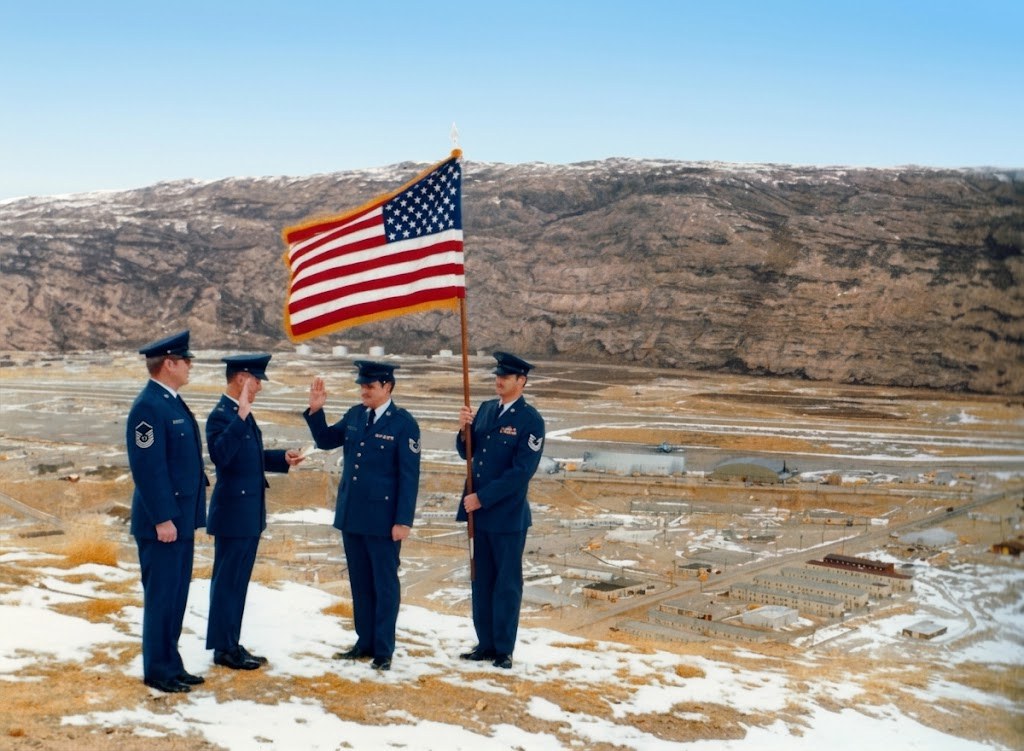
The Next Command
If I had to serve a remote tour, Sondrestrom could not have been a better choice for me at that point in my career. I enjoyed the close Arctic community and took satisfaction in what our broadcasters accomplished with the support of the base.
Prybyla’s replacement was 1st Lt. Miles Wiley, another highly capable public affairs officer.
By the end of the tour, I had managed people and resources, kept a broadcast schedule on the air, edited another base newspaper, and learned how a small station fit into a much larger mission. The assignment had been remote, but the responsibilities were not small.
When the year closed, I was ready for the opportunity Doug Blackwood had described. My next assignment would take me to Colorado and to the headquarters of both a major Air Force command and a Department of Defense unified command. Sondrestrom had been a short tour. It prepared me for one of the major milestones of my career.