Rocking Horse Christmas
December 1973 found Shirley, our eighteen-month-old daughter, and me winging our way to the Far East aboard a Flying Tiger cargo plane. We stopped in Fairbanks, then at Yokota, and then at Clark Air Base in the Philippines before continuing to Taiwan.
At Clark, a welcoming group was sorting out who was going where. Nearly every airman and noncommissioned officer in the cluster seemed to be headed to Vietnam. Our little family was headed in another direction. Eventually we continued to Taipei, arriving about a week before Christmas.
The military exchange had already been picked clean for the holiday. The toy store was out of almost everything. The lone survivor was a rocking horse, and that became our Rocking Horse Christmas.
An Air Force Broadcaster in a Navy Network
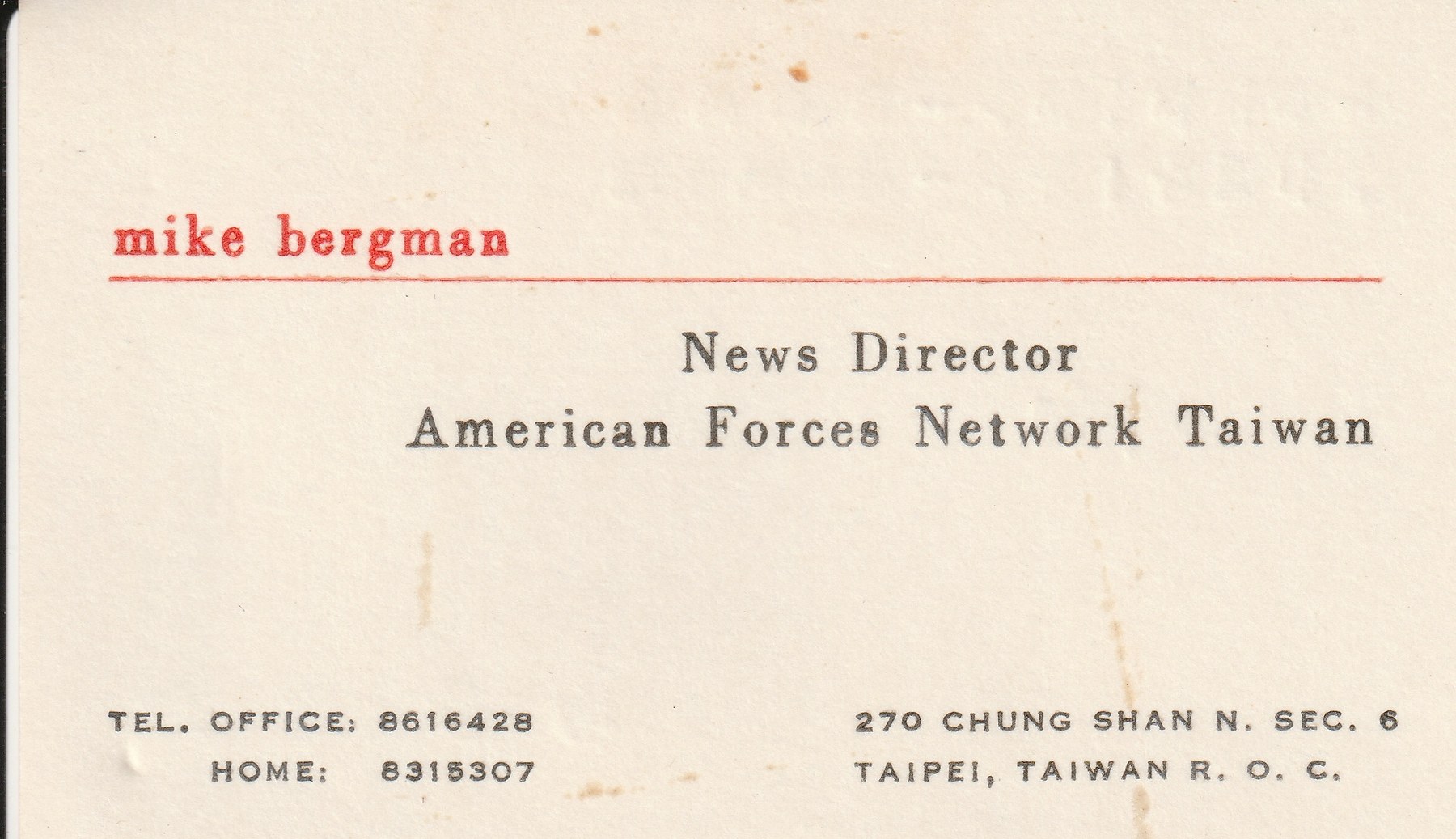
The Navy operated the radio-only American Forces Network Taiwan, the only English language broadcast operation in the country. Taipei was the network lead station. There were outlets at CCK Air Base in Taichung and at Tainan Air Base, not far from the port of Kaohsiung. Only a handful of Air Force people were assigned to the lead station. We were a small Air Force island inside a Navy operation in a joint service environment. The network balanced relationships with Headquarters Support Activity, MAAG, the embassy, and the Taiwan Defense Command.
It was a network standard to gradually rotate newcomers through the familiar broadcasting progression: disc jockey, staff announcer, and finally the place that suited me best - news director.
I was responsible for the weekday radio newscasts, with expanded news at noon and the major broadcast at six o'clock. There was no English-language television available, and AFNT was the only American radio station within earshot. That made us a principal source of news not only for American forces, but also for much of the English-speaking community on the island.
Our engineers enjoyed reminding us that the signal did not stop at the shoreline. They said it penetrated the northeastern third of mainland China.
The diplomatic setting mattered. The United States still maintained its embassy in Taipei, while America's opening to mainland China was changing the political landscape. AFNT served a military audience, but the news we aired could carry far beyond.
Monday Football for the Admiral
Taiwan Defense Command’s public affairs officer, Commander Jay Coupe took a keen interest in any wire copy or broadcast about America's Cup competition. I later learned that both Coupe and Vice Admiral Edwin K. Snyder, commander of the U.S. Taiwan Defense Command, were Washington Redskins fans with social ties to team owner Jack Kent Cooke.
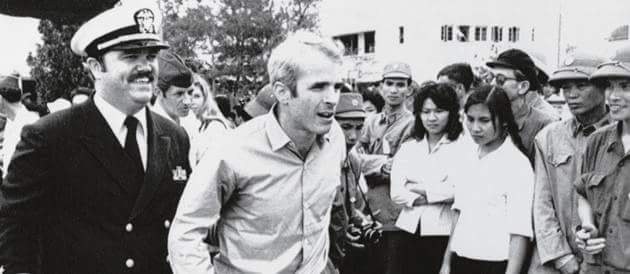
With a fourteen- or fifteen-hour time difference, listening to games live over the voice circuit was sporadic at best. AFRTS in Washington had a natural tendency to favor the hometown team, so Redskins games appeared on the circuit almost every week. I arranged to record them on audio cassette.
At the end of the workday on Monday, I would drop the recording at the admiral's residence on Yangmingshan, not far from our station. As a junior NCO, it certainly heightened my visibility.
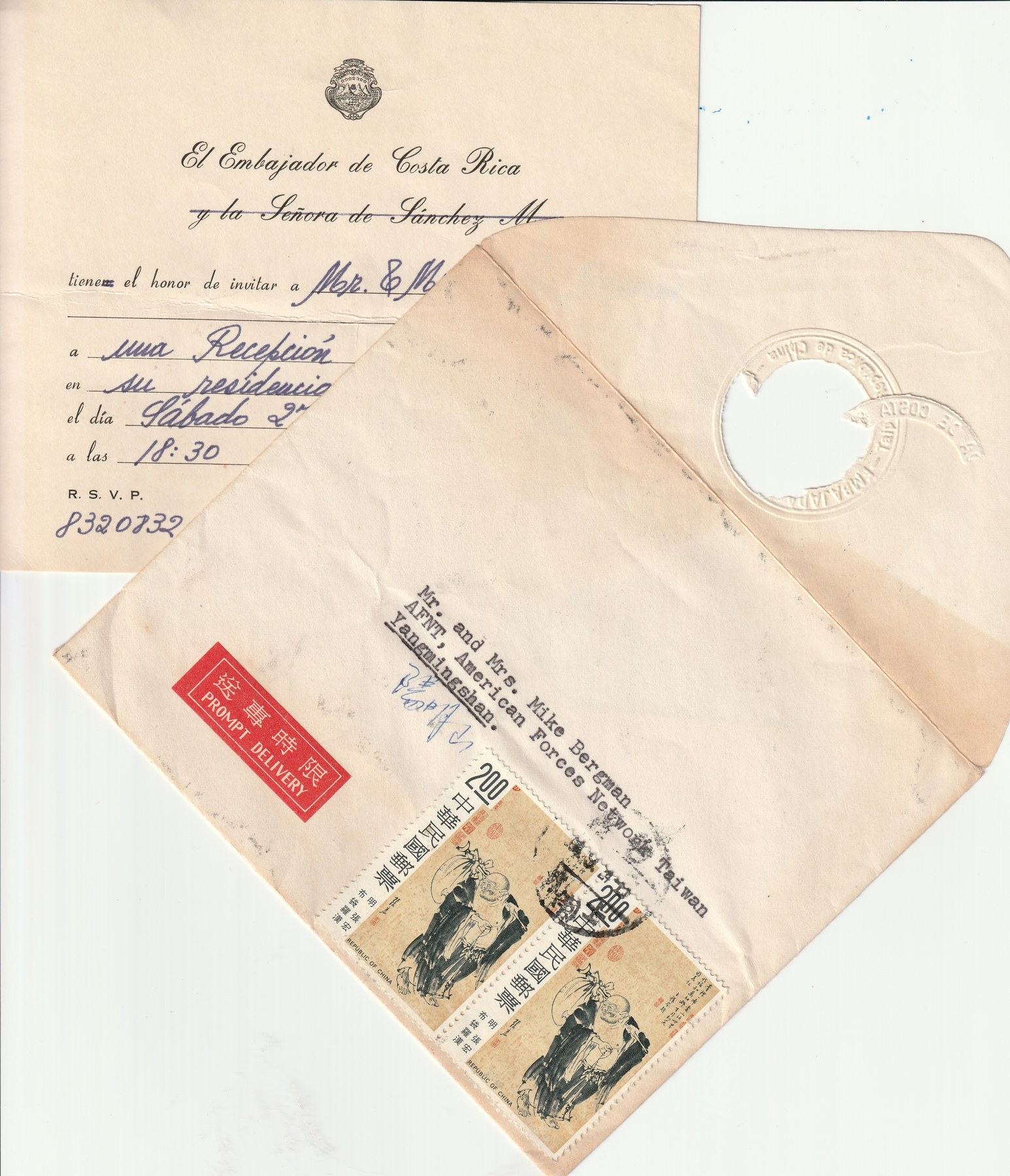
The USIA, ROC foreign ministry and veterans affairs offices often invited us to cocktail parties. At one of them I felt a tug on my arm. It was our young Navy ensign, on his first assignment, the network commander. He asked me quietly to introduce him to the admiral. I did.
On the Club Microphone
One of the unexpected perks of the assignment was being selected as master of ceremonies for events at the MAAG Officers Club off Zhongshan Bei Lu, near the two major Navy compounds. The work came with club membership. For an E-5, that was not an ordinary fringe benefit.
Members of the Flying Tiger Post of the Veterans of Foreign Wars, Post 9957, approached me when the Fourteenth Air Force Association planned a reunion in Taipei. They asked whether I could arrange a reception at the club. Working with Charles Teschler, the club manager, I did.
That reception gave me the opportunity to meet Tommy Corcoran, Tex Hill, Anna Chennault, and others whose names carried the history of the Flying Tigers. Taiwan had a way of placing history at the next table and then handing me the microphone.
Visitors with Something to Say
The U.S. Information Agency was generous about bringing me into the schedule when an American dignitary visited. I was able to spend an hour, one-on-one, recording interviews with Billy Graham, former Defense Secretary Melvin Laird, Senator Barry Goldwater, and others.
Goldwater's interview stayed with me. I asked what he would have done to end the Vietnam War if he had been elected president. He described first filling American aircraft cargo holds with leaflets, blanketing North Vietnam with a warning: accept our conditions within thirty days, or the next aircraft would carry more than paper. Then, he said, he would have followed through.
On another occasion I was seated at breakfast with Agriculture Secretary Earl Butz and Orion Samuelson, the legendary farm broadcaster from WGN whom I had listened to while living in Indiana. When it came out that Butz and I were both native Hoosiers, the secretary and I exchanged pleasantries and notes about Indiana politics. It was an improbable conversation for an Air Force broadcaster half a world away from home.
The State Funeral
When Chiang Kai-shek died in April 1975, news coverage and diplomacy became the same assignment. I remember that Agriculture Secretary Earl Butz was initially discussed as the President's representative. Members of the American business community in Taipei thought the representation should be at a higher level and made their displeasure known to Republican contacts in the United States. Vice President Nelson Rockefeller ultimately represented the United States.
AFNT was offered the opportunity to carry the state funeral live in English. Master Sgt. John Loflin and I began planning, coordinating with our engineers and the officials responsible for the ceremony at Sun Yat-sen Memorial Hall.
The Republic of China officials wanted a uniform appearance among the press. I had to hurry to a tailor and have a black suit made for the occasion. It was one more reminder that broadcasting in Taipei did not stop with a microphone and a script; ceremony, protocol, and politics were part of the signal.
From the Sun Yat Sen memorial hall, I delivered the live English-language narration while Loflin and the engineers kept the broadcast moving smoothly. The ceremony included a twenty-one-gun salute. It was a stirring experience and one of the defining broadcasts of my Taiwan tour.
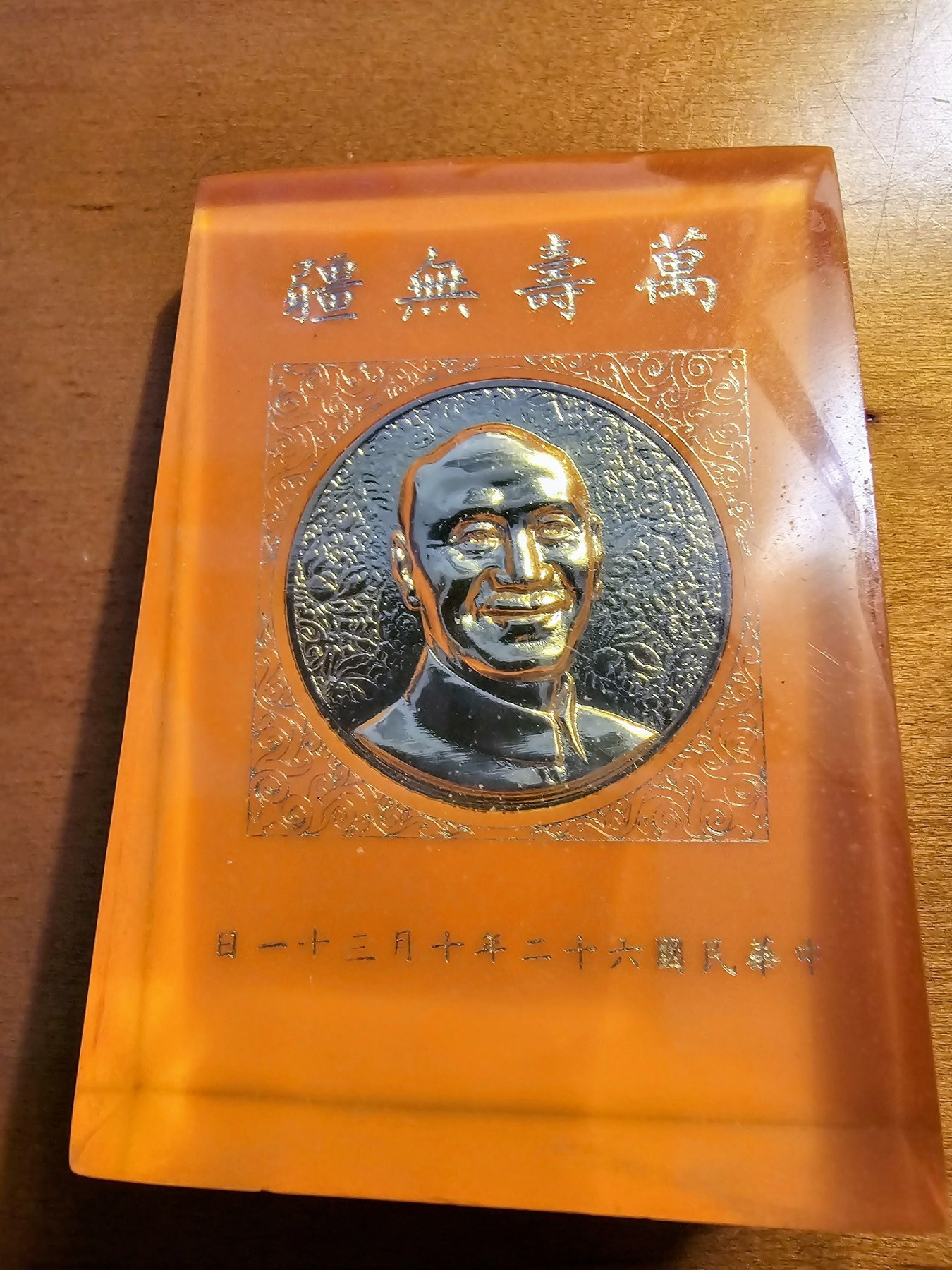
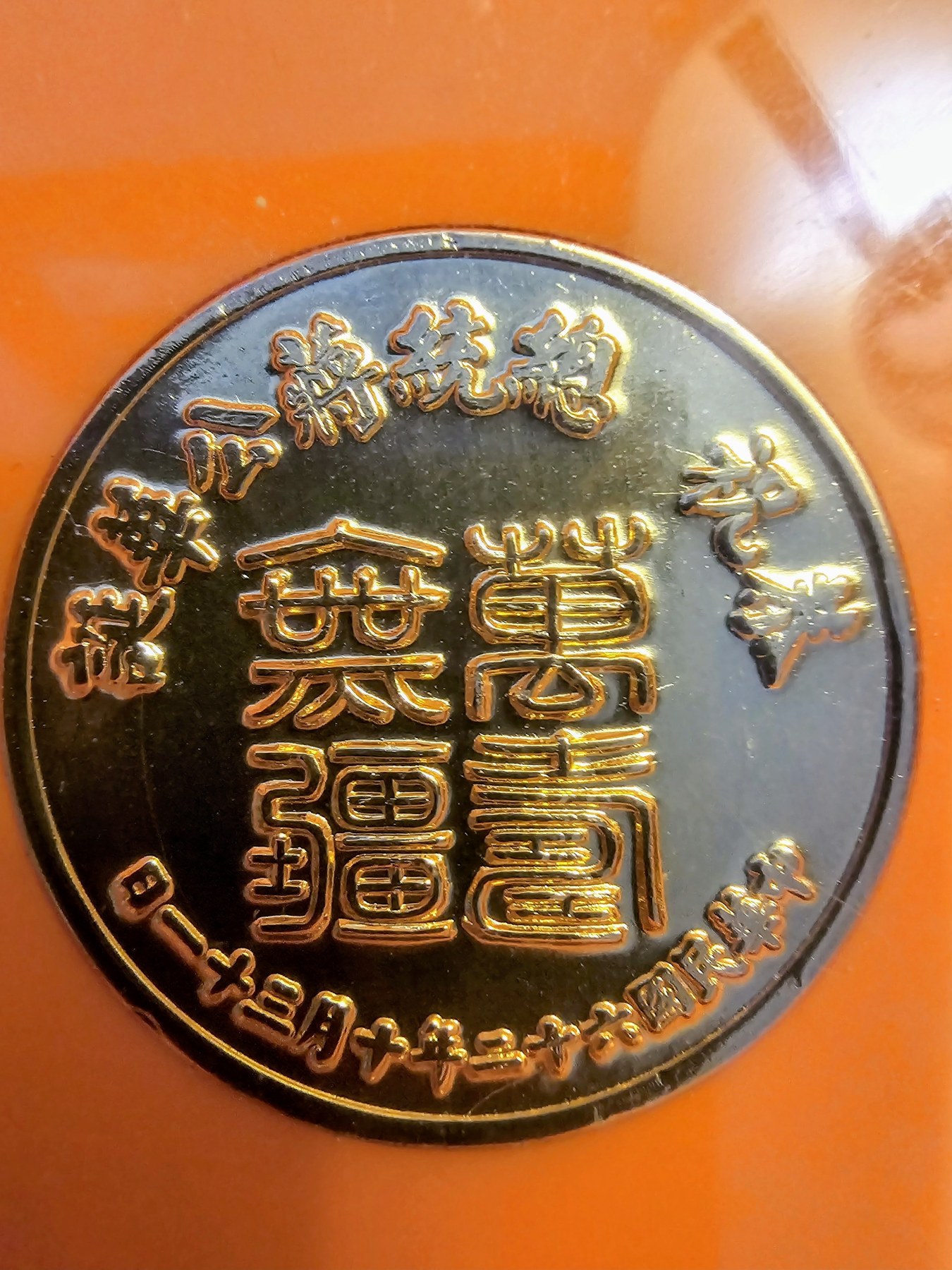
Both sides of a Chiang Kai-shek birthday commemorative medallion dated Oct. 31, 1973. The central inscription wishes ‘boundless longevity.’ The Republic of China government presented it to me during my Taiwan tour.
News and Transitions
The three-year tour was filled with events: President Nixon's resignation, the American Bicentennial, a series of typhoons, and the ordinary demands of keeping a radio network on the air every day.
There was also institutional change. The Air Force decided to start a television operation at Shu Linkou Air Station, a Security Service facility on a mountain on the other side of Taipei. Some Air Force people assigned there seemed to resent the fact that the Navy was running the established broadcasting operation. Senior Master Sgt. Stu Diamond arrived from headquarters PACAF and wondered why a handful of Air Force broadcasters were operating so independently inside a Navy network. We were among the last Air Force broadcasters in the Far East who were not assigned to an Air Force broadcasting squadron.
At my pay grade, I knew little about the worldwide AFRTS consolidation that was underway. We had newscasts to assemble and listeners who did not care which service owned the organizational chart.
When Saigon Fell
When South Vietnam fell in April 1975, events that had seemed distant came directly into our small American community. I was told that the Navy-Marine crew of Admiral Snyder's aircraft evacuated President Nguyen Van Thieu and his family from Saigon. When I asked the crew what they could tell me, they would say only that several very heavy boxes had been carried as cargo.
For a time, Thieu lived in exile only a few blocks from our apartment in Tien Mou, within what was normally an American military housing area. The collapse of a country was no longer just a wire-service story. One of its central figures was living in the neighborhood.
Shirley and I were sometimes invited to the Marine House on Friday evenings, hosted in their residence by the Marines who guarded the embassy. Some of the Marines had been among the last Americans to leave Saigon. One who said he had been on the last evacuation helicopter described the final hours as a frenzy and a blur. He said he didn’t absorb the depth of it until the chopper lifted away and he saw blood on his bayonet.
News Director, News Reporter
Taiwan-era business card and name tag
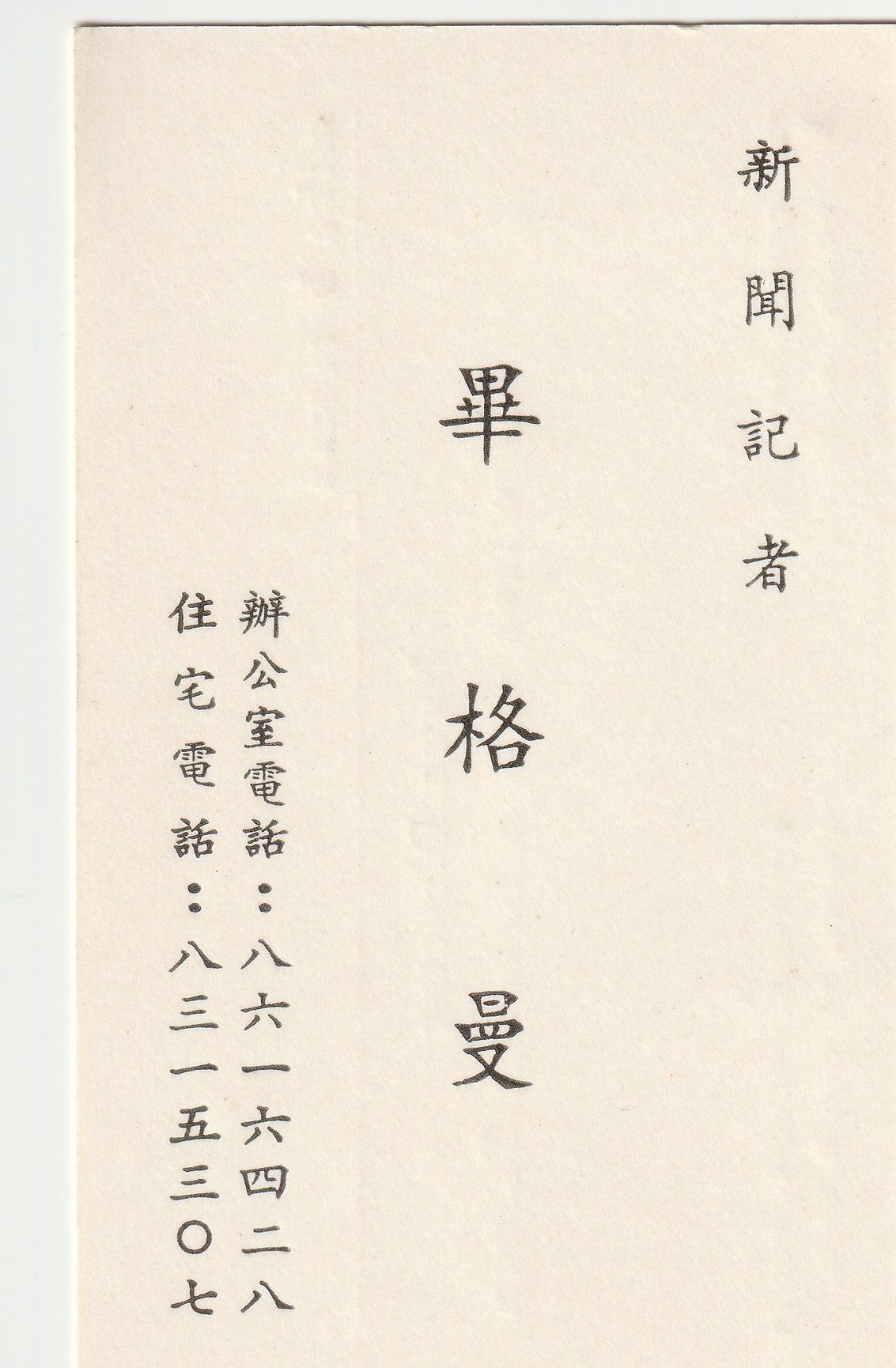
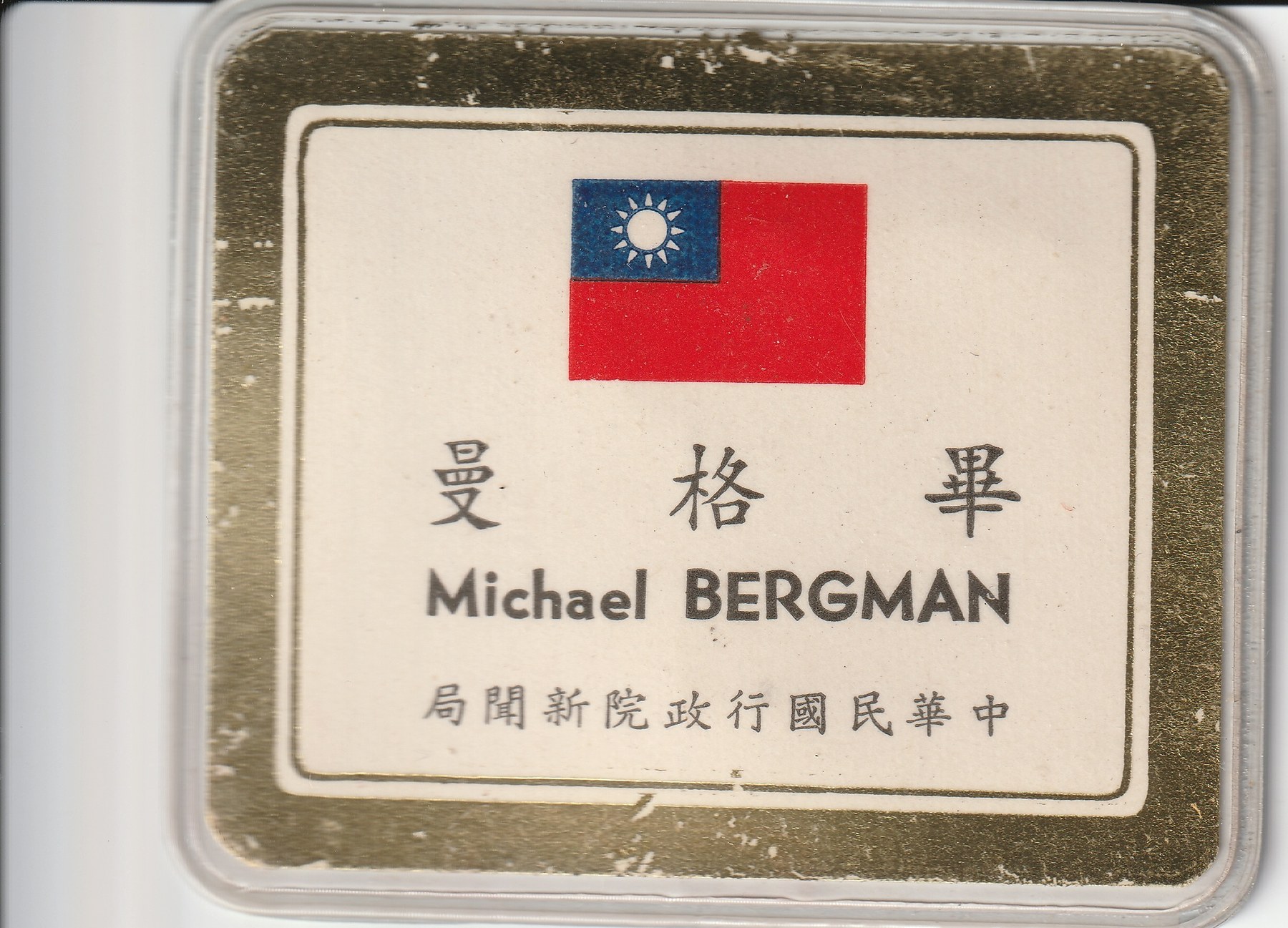
Translation: 畢格曼 — Bergman; 新聞記者 — news reporter; 中華民國行政院新聞局 — Government Information Office, Executive Yuan, Republic of China.
Orders for Greenland
After the fall of Vietnam, the American military presence in Taiwan felt less permanent. Mainland China was emerging as a growing power, while the Soviet Union remained the other great fact of the Cold War. Taiwan was definitely a career-broadening assignment: an Air Force technical sergeant serving in an international capital with diplomats, flag officers, correspondents, international businessmen and probably former, current and future spies. We were the only English-language news and entertainment outlet covering the entire island of Taiwan, with a significant “shadow audience.”
My next orders would take me toward that northern front.
My personnel record had one conspicuous gap: I had never completed a short tour. By early 1976 I had been promoted to technical sergeant, and the Air Force decided it was time. My next assignment was Sondrestrom Air Base, Greenland, one of the Cold War outposts north of the Arctic Circle.
Taiwan had taken me from disc jockey to news director and placed me in rooms with admirals, diplomats, visiting cabinet officers, war correspondents, Air America veterans, and old China Hands.
The next assignment would demand something different. At Sondrestrom I would become a station manager, responsible for people and resources as well as what went out over the air. But the lessons learned in Taiwan - judgment, improvisation, diplomacy, and the need to listen closely - had helped prepare me for my first significant leadership role.