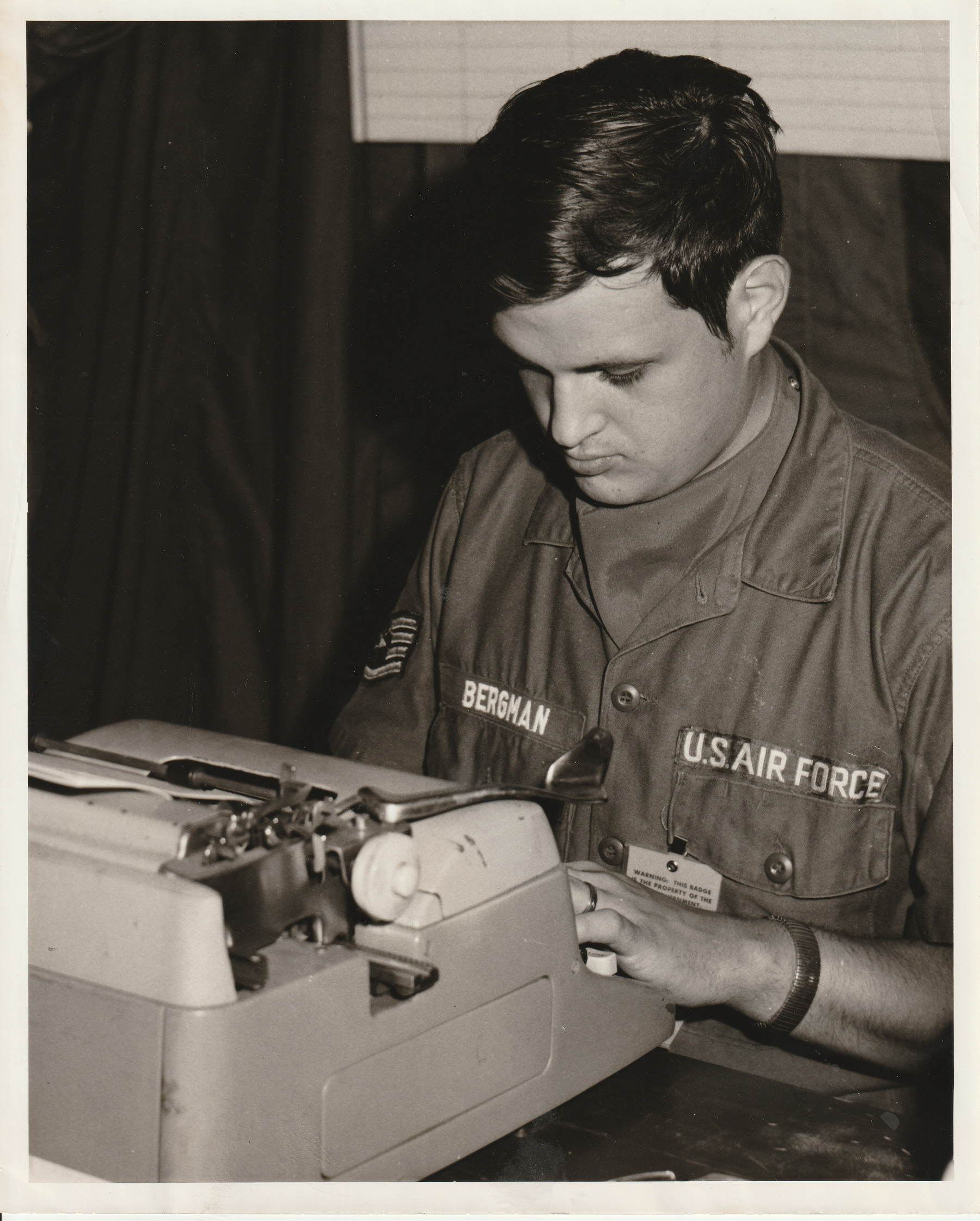
We arrived at Homestead in early January 1973. The base was completing operations in the aftermath of the crash of a civilian airliner - Eastern Air Lines Flight 401, a Lockheed L-1011 - in the Everglades on Dec. 29, 1972. The base was in the news for other events. President Nixon was flying in regularly, using Homestead as the gateway to his Key Biscayne compound.
I was still in civilian clothes those first few days. The Air Force was phasing in the new light blue shirts and dark-blue trousers, and the khaki 1505s were on their way out. There were multiple trips to Clothing Sales to get back in uniform.
Back in the Information Office
The 31st Tactical Fighter Wing information office was in transition, with Capt. Bob Kenny selected for promotion to major and taking over as chief of information. Master Sgt. Chuck Wills, who had been in Southeast Asia and was preparing for retirement, was the noncommissioned officer in charge. As a staff sergeant, I was the second-ranking enlisted member. Based on my newspaper experience, I was immediately thrust into the editorship of the award-winning base newspaper, the Fighter Forum, a weekly with a circulation of 6,500. I was blessed with a team of great writers, all first-termers but solid airmen in every respect.
It felt great to be back in the groove of an information office -- it was not yet called public affairs – and on a base with fighter jets. The 31st's 307th and 308th Tactical Fighter Squadrons rotated F-4E Phantoms to Southeast Asia. I remember the Thailand connection in terms of names that carried enormous weight then: the Wolfpack and the Triple Nickel.
I was also placed on the presidential support team and credentialed by the Secret Service to help manage the press gaggle when the President landed. With that came on-call responsibilities shared with Capt. Kenny. The President was coming nearly every week. We would get calls from the White House press office, usually on a Tuesday night, advising us of a "Big One" and the type of coverage and support desired.
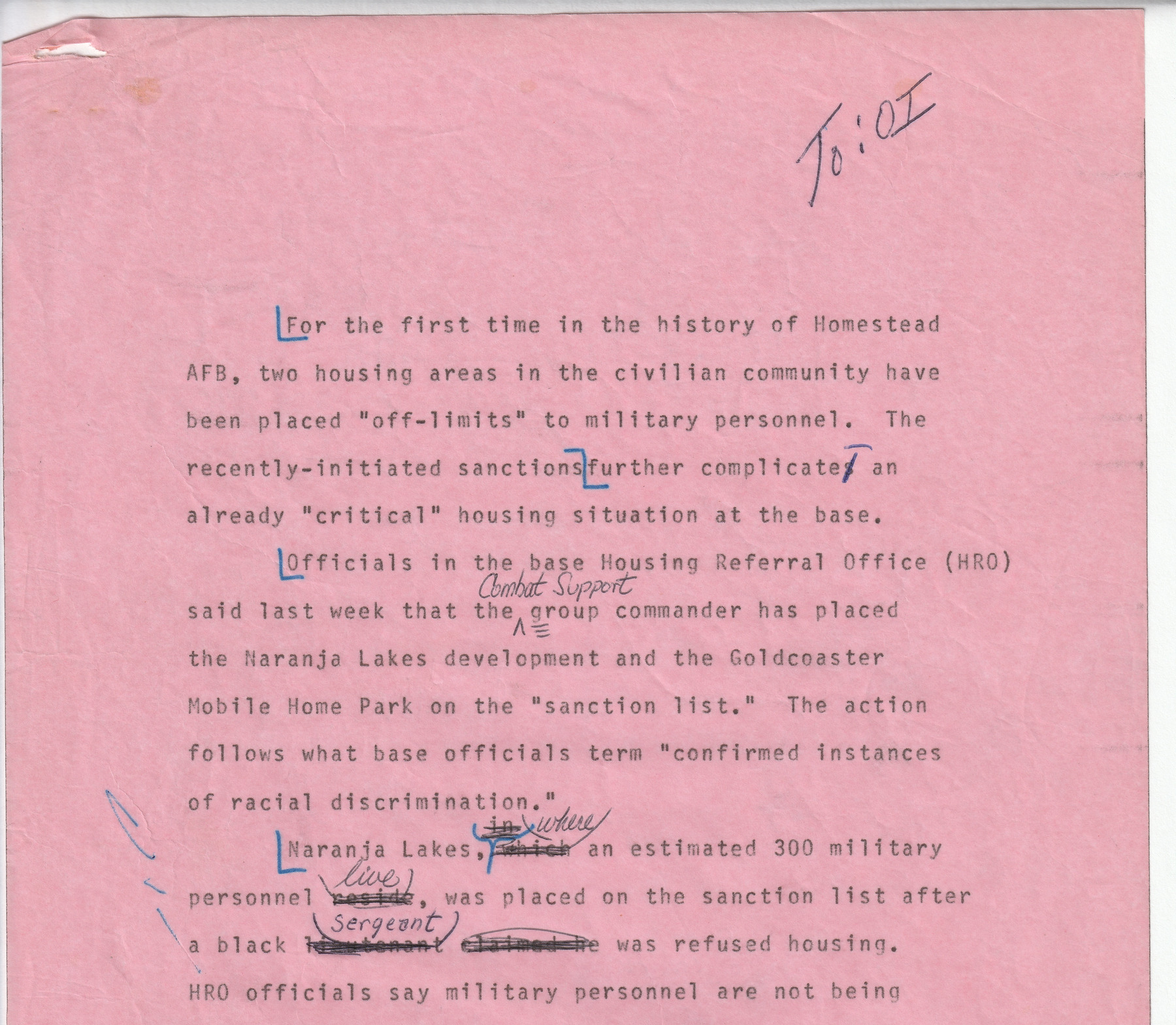
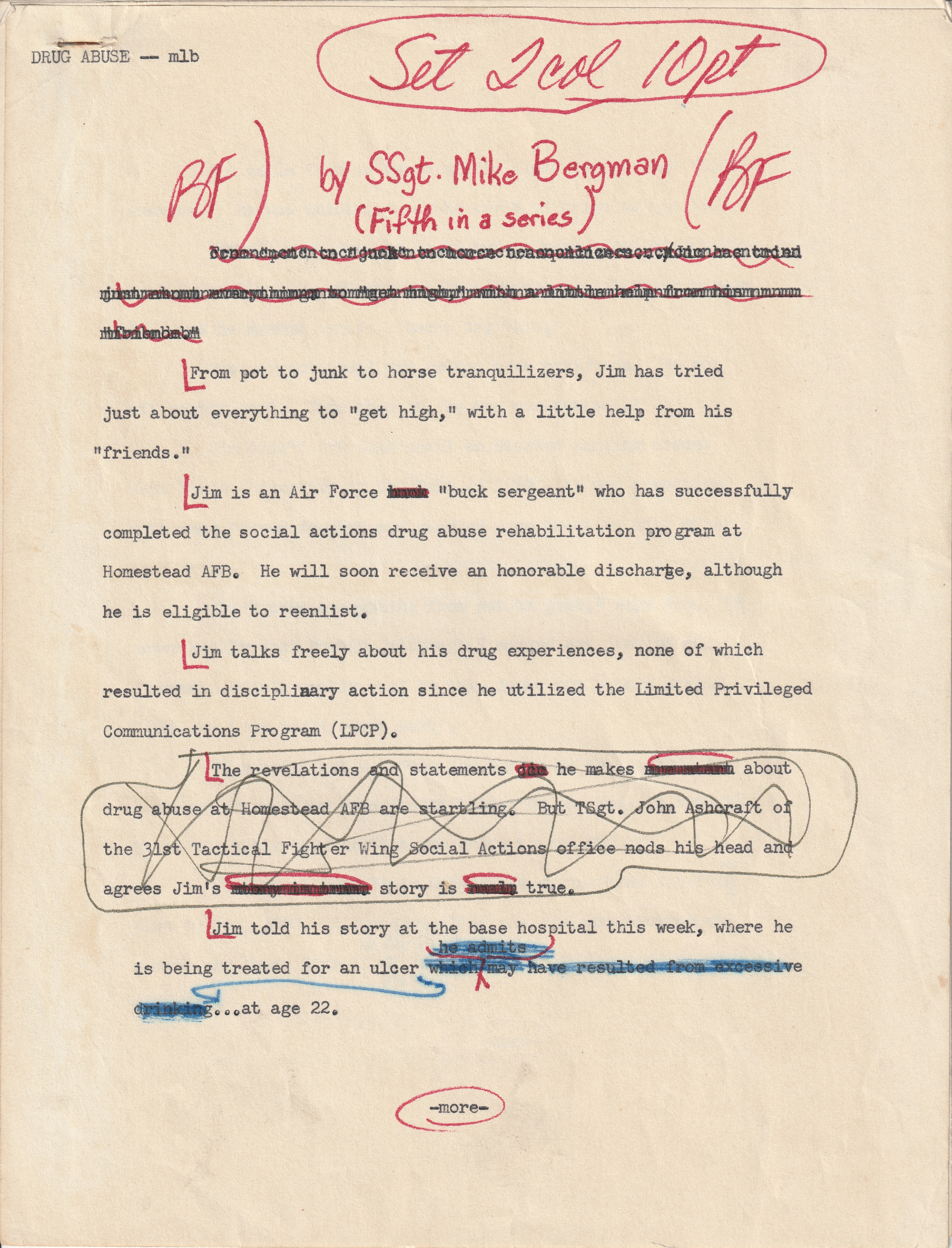
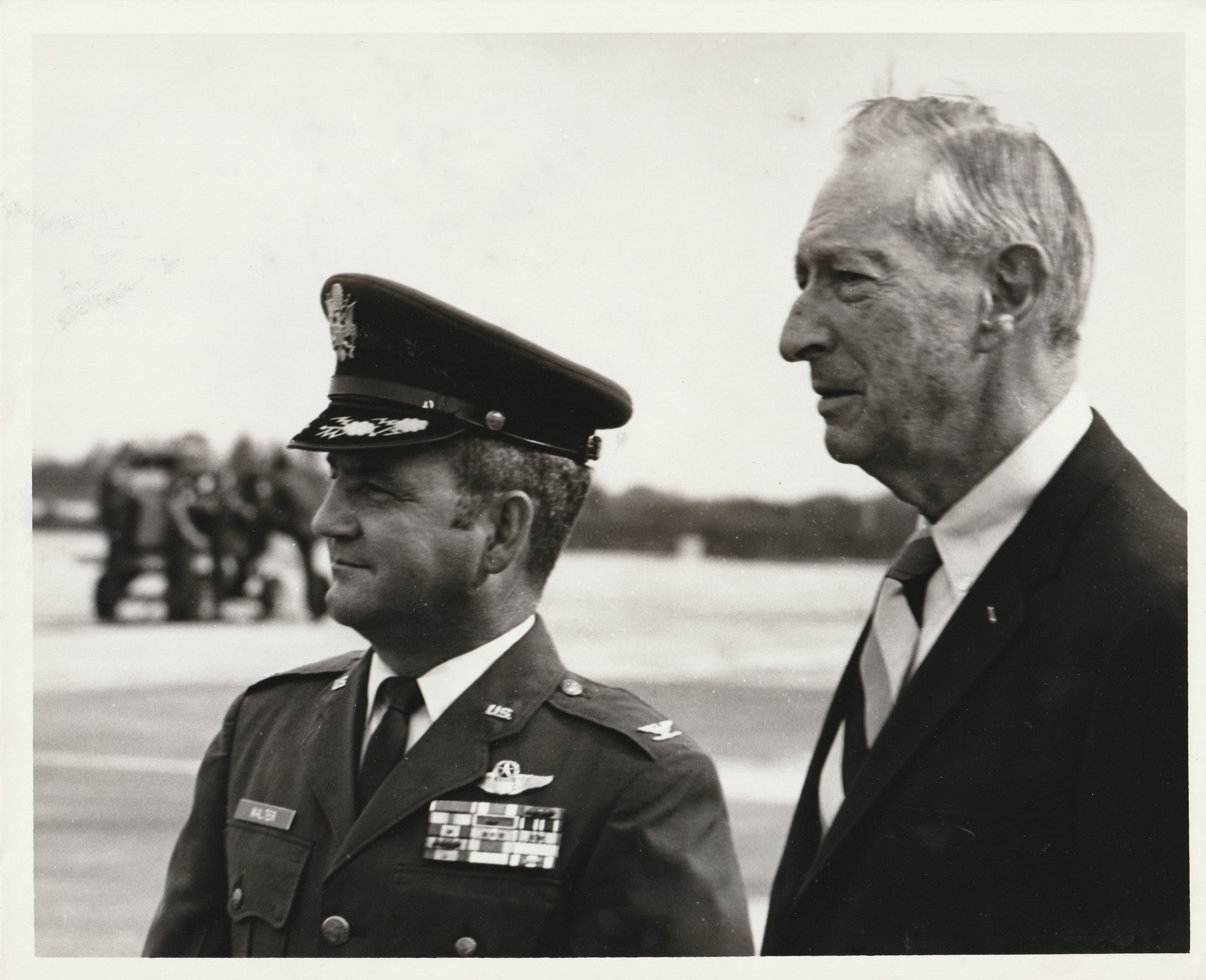
As base newspaper editor, I still had the mindset of a civilian reporter. The introduction of Social Actions offices was underway throughout the Air Force, part of an institutional effort to confront racial inequity and other issues. We at the Fighter Forum tackled some controversial subjects. One was a popular off-base housing complex placed off limits because of racial discrimination. Another examined alcoholism and its impact on the wing, announcing avenues for treatment. I had a good working relationship with wing commander Col. Alonzo J. Walter Jr. He never demanded to see upcoming issues before they were published, other than his ghostwritten columns. After we published those stories, Col. Walter expressed disappointment that we had run them but privately told me they were stories that needed to be told.
The President's Weekends
My presidential support responsibilities, meanwhile, were escalating. When President Nixon made a televised address to the nation declaring "peace with honor" in Vietnam on Jan. 23, 1973, a "Big One" like this was to be more elaborate than his usual planeside greeting with the wing commander and Bebe Rebozo. Three days later, the arrival included local POW/MIA families, a high school band, and retired Army Gen. Mark W. Clark.
As the year progressed, we could count on the President arriving almost every weekend. At first, the White House press charter would land 30 minutes before Air Force One. We would gather the reporters into the gaggle bullpen on the flight line and screen credentials for other journalists. As the Watergate matter escalated, media treatment changed. The President sometimes opted to fly in without notifying the White House press corps in advance, leaving them to their own devices to make their way south. Dan Rather, who (now) Maj. Kenny had known during an earlier assignment in Texas, had become a focal point of criticism from the President's defenders and, as I remember it, was no longer traveling with the familiar group.
Initially, the people aboard Air Force One numbered about 60 or 70. The entourage dwindled to only a handful, including White House Chief of Staff Alexander Haig, presidential secretary Rose Mary Woods, the cadre of Secret Service agents, and Air Force security police. I was told by baggage handlers that Air Force One contained two constant items: several reels of the motion picture Patton and a safe that presumably held the Watergate tapes.
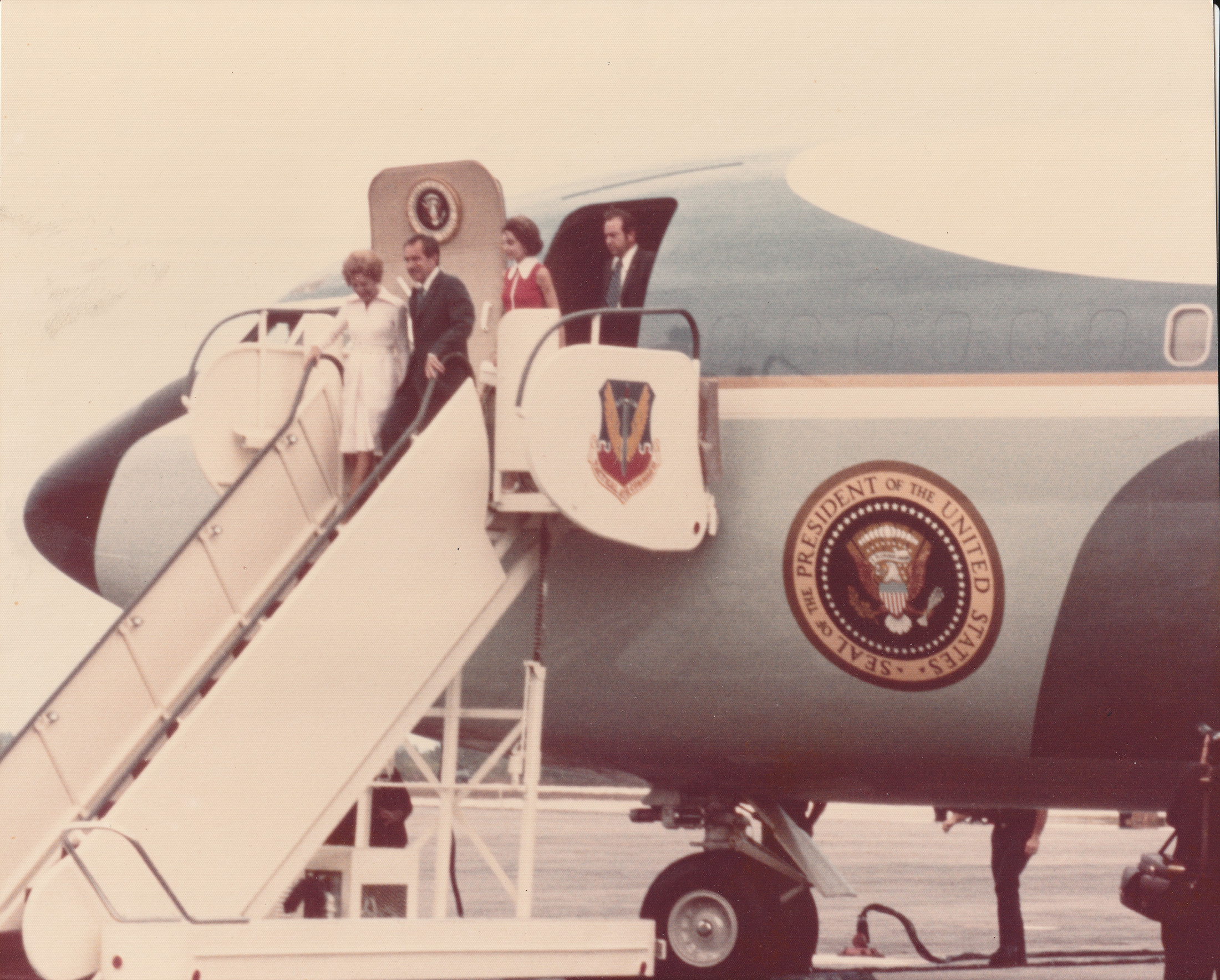
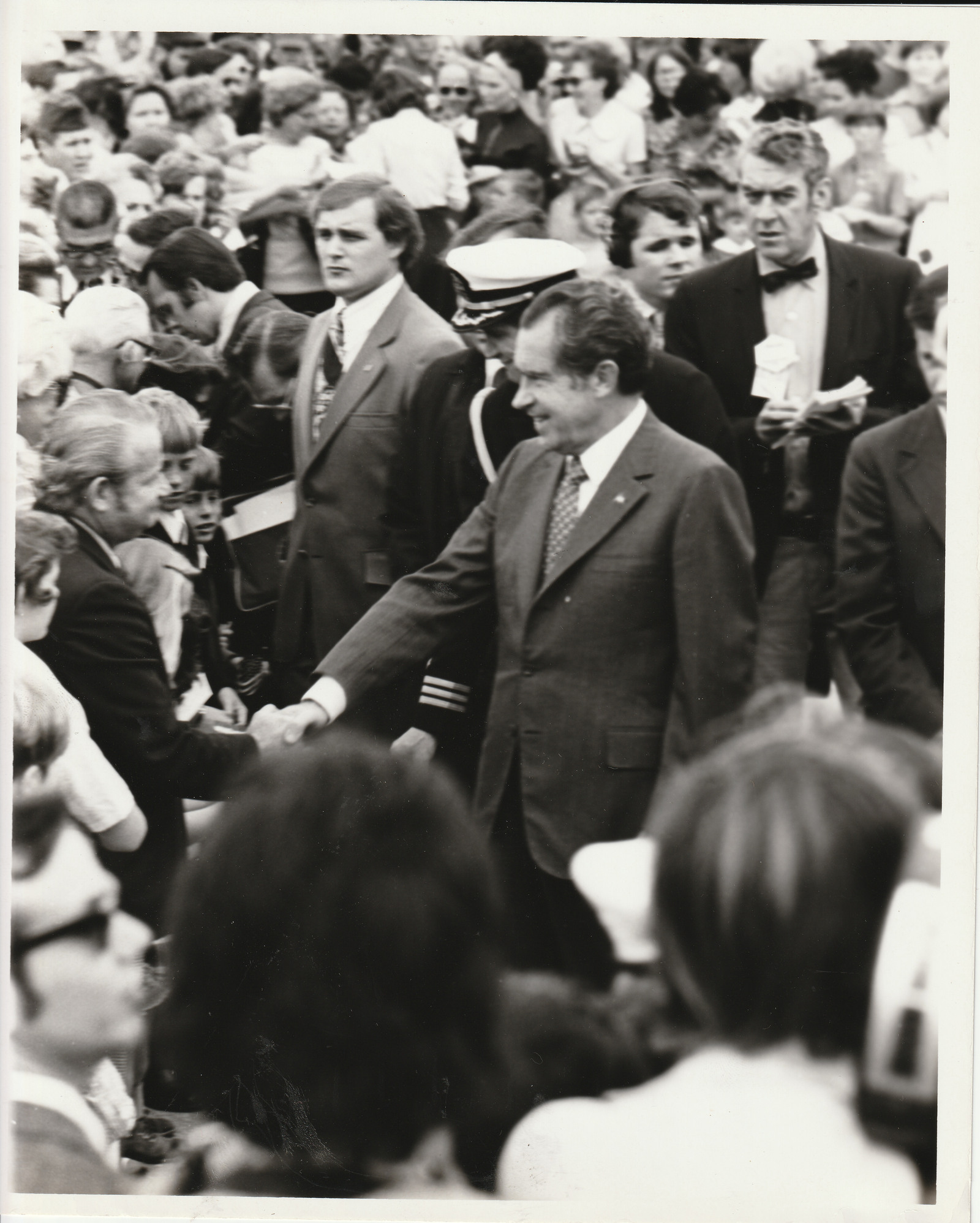
President Richard Nixon at Homestead: arriving aboard Air Force One (my photo) and greeting the crowd (USAF Photo)
The Real Thing
Little did I know that presidential support duty would lead to one of the most memorable, if unsung, episodes of my Air Force career. It was early on what I remember as a Saturday morning, about 3 a.m., when I got the phone call. Our newly assigned second lieutenant told me to report for work immediately. "I can't tell you why. Get here as soon as possible."
I immediately flipped on the radio, thinking that perhaps I might get some clue as to what was going on as I hurriedly dressed. In the fog of waking up, the radio was giving chilling accounts of aliens. On the move. In marshy areas. Then it struck me: It was close to Halloween, and the radio station had been advertising a rebroadcast of Orson Welles's War of the Worlds.
When I got to the office, I learned that we were now in a heightened defense condition, DEFCON III. We did not know much else, other than that our public affairs response would be a flat "no comment." Air Force One was on the tarmac. The White House press corps was nearby and undoubtedly awakening. Maj. Kenny had been tapped only a few days earlier to serve as the wing commander's executive officer and was now working upstairs. Our NCOIC was on leave.
As we geared up, trying to get more information, I was called to the wing commander's office. Col. Walter and Maj. Kenny were on a speakerphone. On the other end were Maj. Gen. Daniel "Chappie" James Jr., then principal deputy assistant secretary of defense for public affairs, and Mr. Mansfield from Tactical Air Command headquarters. Our second lieutenant had just been quoted on NBC television news as saying, "This is not an alert. This is the real thing."
Gen. James's instructions were clear: "Tell that lieutenant to go home and take his phone off the hook. If anyone calls and asks for him, your response is, 'He's off duty.'" Maj. Kenny looked at me directly and asked, "Mike, can you handle it?" Of course, my answer was, "Yes, sir." So off I went, the ranking airman in the office.
To no one's surprise, the White House press corps was soon at the door of wing headquarters and our downstairs office. The presidential support area on the flight line had been declared off limits to them. As I learned later, we were in the process of flushing F-4s for emergency resupply to the Israeli Air Force.
It seemed like we were in for a long impasse. I appeared before them every 10 minutes, but I did not have much to tell them other than that I was trying to get answers to their questions and that there would undoubtedly be a briefing at the proper time. I am not sure who all was there, but I recognized Robert Pierpoint of CBS, Jerry Landay of ABC, and Ike Pappas of CBS - the "Papoose," as Col. Robert J. O'Brien would later call him. Mr. Pappas did not normally travel with the White House corps, and I thought it was odd that he was there.
I recall it was about an hour and a half before White House deputy press secretary Gerald "Jerry" Warren showed up. It was a grueling 90 minutes.
In retrospect, we held the line.
Exhausted, I returned home. In only a matter of days, our second lieutenant was tapped for missile duty. And I had another episode to add to the "legend" I was building in my own mind.
Aren’t You a Broadcaster?
This was also about the time my broadcasting Air Force specialty code - what we referred to as the "X1" AFSC - caught up with me. The Air Force that did not need any prior-service airmen with that specialty was suddenly in dire need of them to fill short-tour overseas billets. A short tour was usually to a remote location where military dependents were not authorized. I was on orders for a short tour to Ching Chuan Kang (CCK) Air Base near Taichung, Taiwan. I would have to leave my young family behind.
Maj. Kenny, and I think Col. Walter, tried to weigh in and get the assignment turned off, citing my presidential support duties and the lack of a senior NCOIC in the office. To no avail.
I prepared for the short tour, but only about three weeks before I was due to leave the base, the personnel office notified me that I was no longer going to CCK. I had been diverted to meet more urgent needs at American Forces Network Taiwan (AFNT) in Taipei. And it would be an accompanied tour, I could take the family.
Another eventful chapter in my public affairs career was coming to an end. Unsung? Maybe. My mind often returns to those Homestead events. I had learned, as a fledgling sports referee and umpire, that the best officials are the ones you never noticed as being there.
To tell the truth, I would have been happy to spend the rest of my career in public affairs offices, writing, editing, and dealing with the media. Even conducting tours and gathering information for hometown news releases.
But I could never shake that persistent broadcasting specialty code.