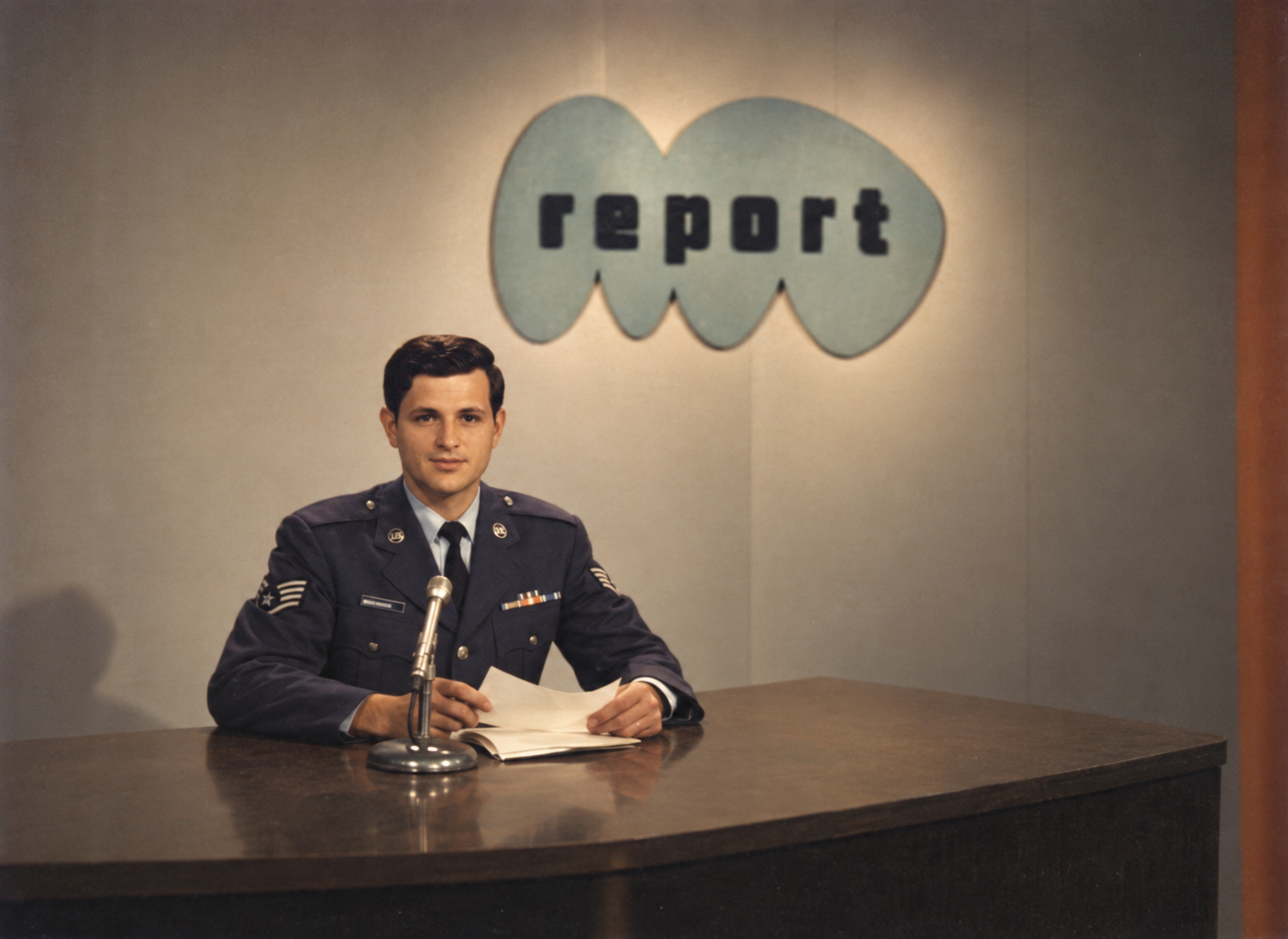
I arrived on Crete in December 1968, a young airman still learning both the Air Force and the broadcasting business.
Iraklion was a long way from Suffolk County, Long Island, in almost every respect. The Mediterranean climate was certainly welcome, but so was the opportunity. The Armed Forces Radio and Television Service station was staffed by an interesting mixture of people. Many of the younger airmen were bright, well-educated and serving their enlistments during the Vietnam era. Their supervisors were mostly career staff sergeants, some of whom had endured years in a promotion system that had not always been kind to them.
It was a small broadcasting operation, and that meant everybody eventually learned to do almost everything.
Learning Every Position
I began with television.
By modern standards, our equipment was primitive. We had a film chain, 16 mm film, a slide drum, a basic switcher and audio equipment. Our studio lighting was standard, and the black-and-white cameras were Dage industrial-quality vidicons. Much of my early work amounted to operating the board, loading films and slides, catching station breaks and making the necessary changes when one film program ended and another began.
It could become routine.
The exception was live television.
When the news came on, somebody had to switch it, and that gave me my first taste of the immediacy that makes broadcasting different from almost anything else. Once the announcer began talking, there was no editor standing nearby with a blue pencil and no second chance if the wrong slide appeared or the switch came late.
Whatever happened went out over the air.
After several months, I moved into radio, and eventually I became a disc jockey myself.
There is something deceptively simple about sitting behind a microphone playing records. Done badly, almost anyone can do it. Done well, it requires timing, pacing, judgment and an instinct for how much personality belongs between the music. You learn how to fill time without sounding as if you are filling time. You learn to think ahead while speaking in the present.
Mostly, you learn not to panic when something goes wrong.
Those lessons would prove useful many years later.
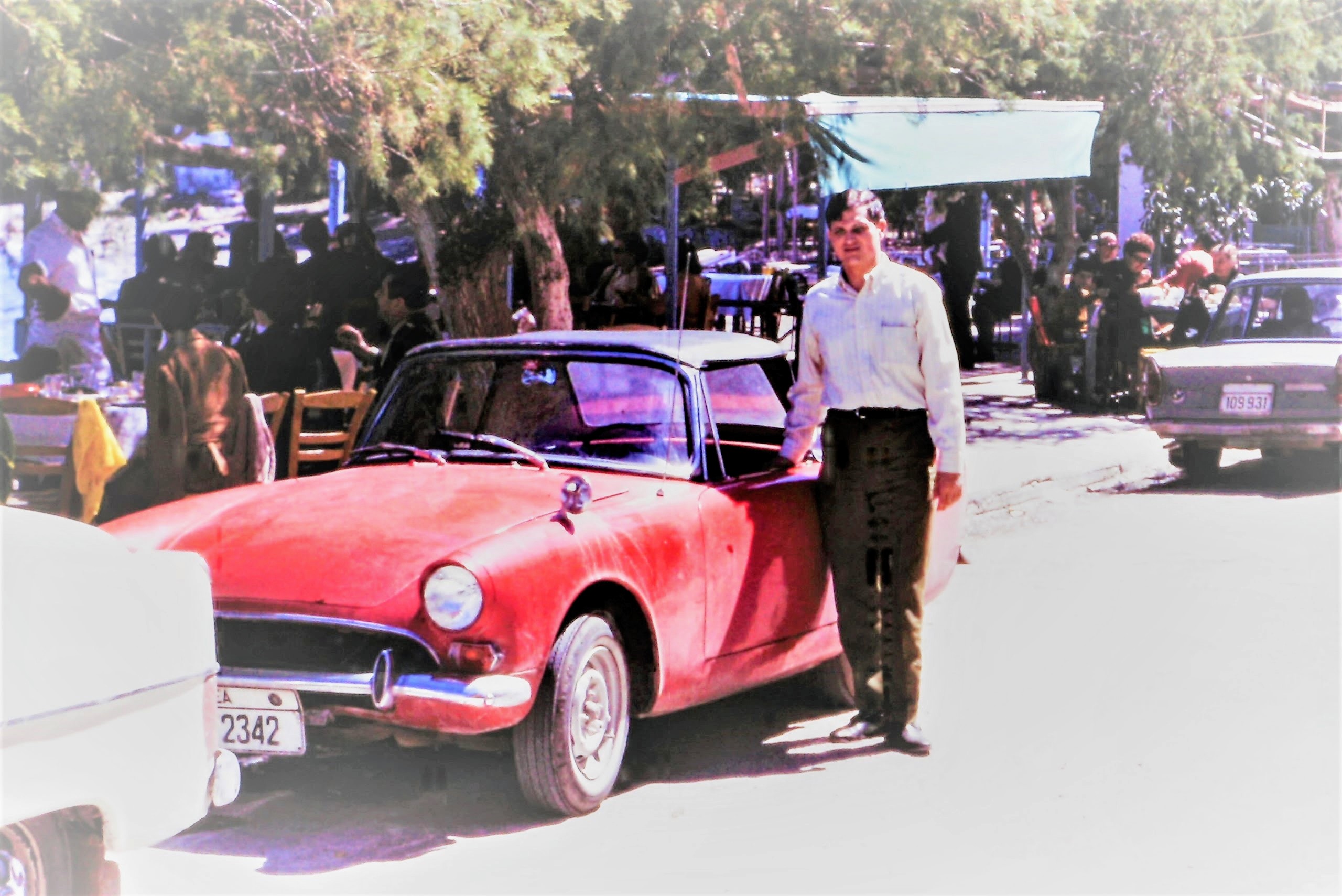
One of our radio assignments took us to the spring opening of the base beach on the Mediterranean for a remote broadcast. It also became personally important for another reason. A friendship with Shirley developed there into something more serious. A little more than a year later, we would be married in the base chapel.
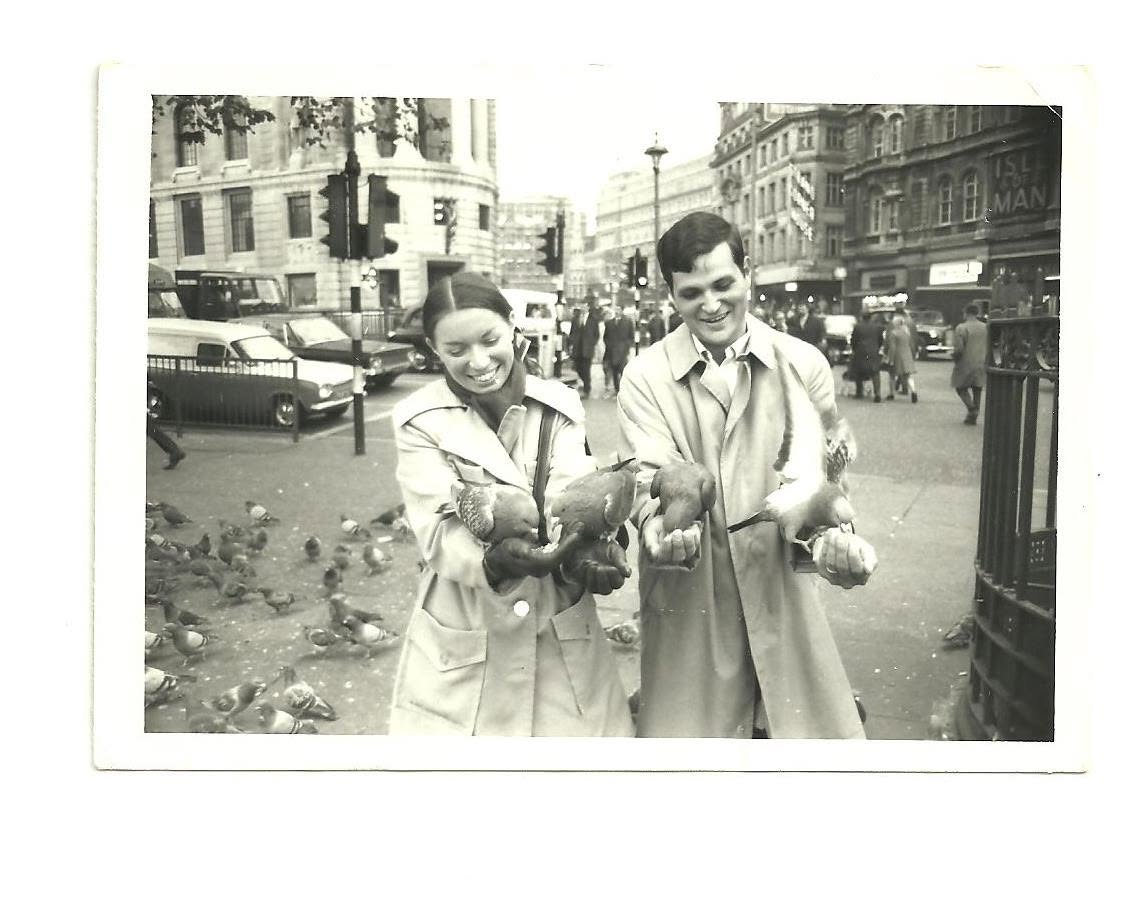
Shirley and I lived in Hersonissos, where we were two of only a few Americans in the village. After we married, we had our delayed honeymoon in London.
I wanted news.
My broadcasting ambitions, meanwhile, were moving in another direction.
After my radio rotation, I became the newscaster for our daily live 6 p.m. television newscast.
For me, this was the real thing.
I loved assembling the copy, finding audio actualities when we could get them, and trying to make each story sound like something more than words being read from a sheet of paper. Television added another complication: the pictures had to match the words.
We had no videotape capability for news and no film coverage of our own. The visual side of the newscast depended largely on still slides. Before going on the air, I had to assemble them, arrange them in sequence and make sure the correct image appeared with the correct story.
Everything was live.
There were no digital graphics, no instant video clips, no computerized editing systems and certainly no button marked “undo.”
It was crude television, but it was television, and I was learning the craft from the inside out.
A Cretan Christmas
Christmas Eve, 1968
One of my clearest memories of Crete came almost immediately after my arrival.
I worked the night shift on Christmas Eve 1968, my first Christmas away from home.
Late that evening, during a break between film changes, I stepped outside into the chilly Cretan air.
Somewhere in the distance I could hear sheep. Then a dog barked. Farther away I could make out the faint glow of a shepherd's lantern.
I was not particularly spiritual at the time, but the setting made an impression.
Above us, the astronauts of Apollo 8 were circling the moon, carrying human beings farther from Earth than anyone had ever traveled. Yet on this Mediterranean island, a shepherd tended his animals much as shepherds had done for centuries.
The contrast stayed with me.
The sheep still needed tending.
And Christmas would dawn around the world.
Becoming a Journeyman
By the time my first enlistment approached its end, I had accumulated experience in several different corners of broadcasting. I was hardly Walter Cronkite, but I was no longer simply the young newspaper reporter who had entered the Air Force. I still believed the civilian world was where I ultimately belonged.
So, as 1970 ended and my enlistment neared completion, I decided not to re-enlist.
The hometown newspaper in Plymouth, Indiana, had kept a job open for me. In March 1971, I returned home and became a government reporter.
It was journalism in its most traditional form.
I covered county government, the courthouse, the sheriff's department, school boards, city councils and assorted other beats. There were meetings, budgets, arguments, elections and the thousand small matters that make local government work—or occasionally prevent it from working. And hot lead gave way to offset printing. Nikon 35 mm cameras were replacing our archaic Speed Graflex cameras.
It was useful experience.
It was also a useful education in something else.
Civilian journalism did not pay very well.
On March 2, 1972, our daughter was born, and for a brief period I assumed we might remain in Plymouth permanently.
Then the telephone rang.
The caller was Dave Rinehart, a friend from Iraklion who was then working as a sports and weather announcer at a television station in North Platte, Nebraska.
The station needed someone who could handle television production, writing and some on-air work.
More important from the standpoint of a young family, the job paid about $25 a week more than I was earning at the newspaper.
Today that does not sound like much.
At the time, it was enough to get my attention.
We packed up, and headed for Nebraska.
Television on the Plains
North Platte was a very small television market, and the station itself was correspondingly small. There were fewer than 10 employees, as I remember it.
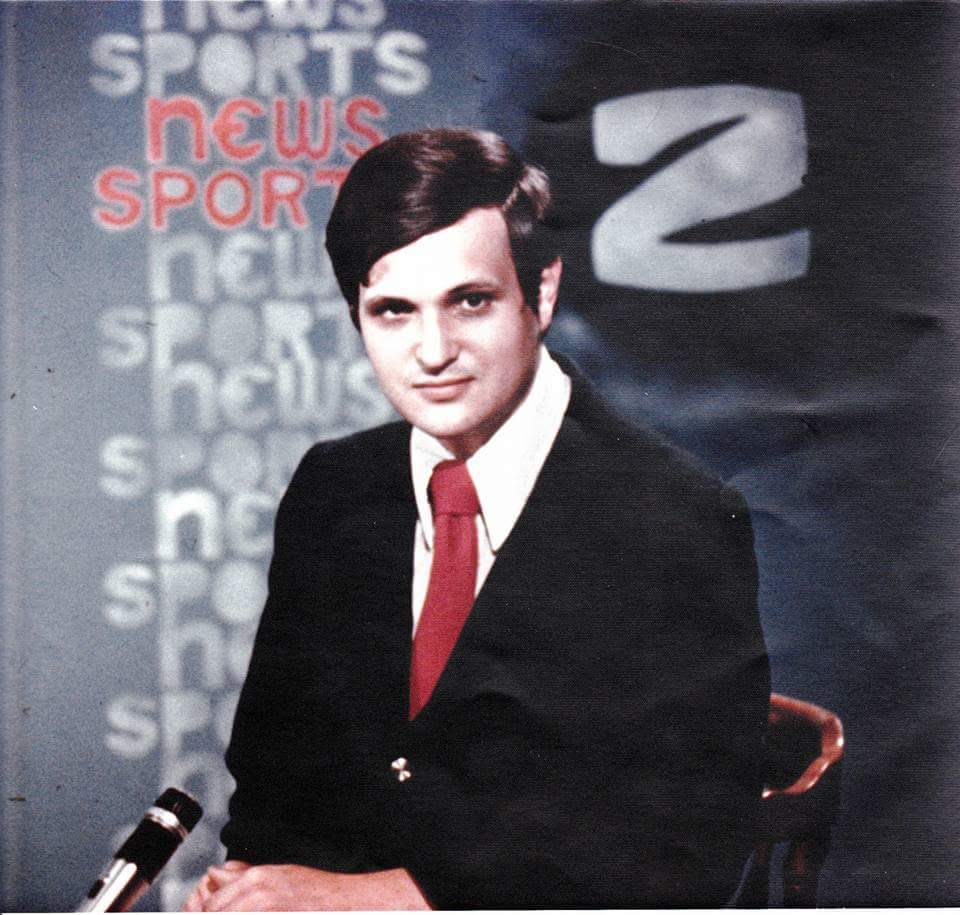
My title was continuity and production director, which sounded considerably grander than the size of the organization suggested.
I supervised an artist, a traffic person and part-time camera operators and talent. The artist, Kay Barnett, was married to a high school football coach who later rose to head a Big Ten team. The traffic person, Nancy Comer, had been a high school classmate of Art Ferguson in nearby Kearney, Neb. Art was better known as deejay Charlie Tuna.
I wrote, voiced, and acted in commercials. I directed programs. I did production work. I also handled Saturday night news and weather broadcasts.
The vice president and general manager, Ulysses Carlini, was the station's only salesman. Late in the afternoon he would arrive at my desk, dump the day's collection of advertising material in front of me and announce, in effect, that these were the sponsors he had sold. He would then process the 35mm slides he had taken.
Now I had to create commercials.
It was another kind of education.
At Iraklion, I learned broadcasting within a military system. At North Platte, I began learning what commercial broadcasting looked like when sales, production and programming were crowded together inside a tiny station with barely enough people to keep everything running.
I was paying my dues.
The problem was that I had begun to wonder whether I wanted to keep paying them.
There was a romantic image attached to civilian journalism and broadcasting. I had chased some versions of it since my newspaper days.
The reality was more complicated.
The work was interesting. The experience was valuable. But the pay was meager, advancement was uncertain and family responsibilities had changed the equation.
I had also learned something during my first enlistment that I had not fully appreciated until I left it.
The Air Force had drawbacks.
But it also offered a quality of life I knew from experience.
There was steady pay. There were benefits. There was structure. There was opportunity for training and advancement. And perhaps most important, I already understood the institution.
I knew how to live in blue.
Going Back
During my time at North Platte, the local Air Force recruiter periodically delivered public service material to the television station.
At some point he mentioned that if I ever considered returning to the Air Force, I should talk to him.
I filed the idea away.
I wasn't ready.
Then family circumstances changed.
After Shirley's mother died of cancer, she understandably wanted to be closer to her father in Florida.
Finding another civilian television job presented a practical problem. We had virtually no way for me to prepare a proper television air check without making it obvious to everyone at our small station that I was looking elsewhere.
I went back to the recruiter.
What, I asked, were my options?
Could the Air Force get me to Florida?
The answer became entangled in the usual machinery of personnel records and Air Force specialties. The Air Force didn’t need broadcasters. It needed information specialists. My Defense Department Form 214 did not initially reflect my information Air Force specialty code. That required correcting before the possibilities opened.
Eventually Homestead Air Force Base appeared as an option.
That changed everything.
In December 1972, I reenlisted.
I had worked as a government reporter. I had moved into commercial television. I had written, produced, directed and appeared on camera. More important, I had learned to think like a reporter, producer, cameraman and TV announcer—skills that would influence my posture every time I would answer a media query over the next decades.
But I still had much to learn as a public affairs noncommissioned officer. Those lessons would come fast and hard at Homestead Air Force Base.